
Travel · Canada
Airbnb vs Hotel in Canada: Compare All-In Cost After Taxes, Cleaning Fees, and MAT
The short-term rental looked $70 a night cheaper. At checkout it was a cleaning fee, a guest service fee, HST, and a municipal accommodation tax. The hotel that looked expensive included the kettle, the walk to dinner, and a cancellation rule a person can read. Households lose the comparison when they stop at the search card.
This is guest-side math for a Canadian trip. It is not a host’s tax guide. Rates below were read on 23 Sep 2026. Cities set their own accommodation taxes. Use the checkout screen for the booking in front of you, and use this page to know which lines to unbundle.
Disclosure: Hotel and short-term rental booking sites are an offer type. Saving Optimizer may earn a commission if we later add partner links. We do not currently claim a partnership with any platform or hotel brand. Tax rates were read from provincial and City of Toronto pages on 23 Sep 2026 and differ by city. Education only.
Key takeaways
- Compare the checkout total: nightly rate, cleaning, service fee, GST/HST, and the local accommodation tax. The search card is a teaser.
- In a labelled Toronto four-night sketch, a $175 short-term rental and a $245 hotel landed within about $35 of each other after fees and tax. Cafe breakfasts for four, at $16, added about $256.
- A kitchen wins when you will cook, the party is large, and the stay is long enough to absorb the cleaning fee. A one-night downtown stay usually does not.
- Toronto’s municipal accommodation tax is 6% for stays beginning 1 August 2026 (the temporary 8.5% rate ended). The City says HST applies on the MAT.
- Alberta’s tourism levy is 6% on accommodation booked after 31 March 2026 (4% if booked before 1 April 2026). Vancouver adds PST, MRDT, and a 2.5% major-events tax.
- Decide with nights × party size × whether you will use a kitchen before you pick a logo.
Build an all-in spreadsheet: nightly rate, cleaning, service fees, GST/HST, MAT/MRDT/tourism levy
Build the sheet before you fall in love with a photo. One row per line the checkout actually shows. If a platform lumps “taxes” into one number, open the breakdown. If it will not break the number down, treat that listing as harder to compare, not as cheaper.
| Line | Short-term rental sketch | Hotel sketch |
|---|---|---|
| Nightly rate × nights | $175 × 4 = $700 | $245 × 4 = $980 |
| Cleaning | $140 | $0 in the room rate |
| Guest service fee | $118, an illustrative 14% of $840. The real fee is whatever the screen says. | $0 |
| HST 13% on that subtotal | $125 on $958, labelled. Platforms choose the tax base. | $127 on $980 |
| Toronto MAT 6% | $50 on room plus cleaning ($840), labelled | $59 on $980 |
| HST on the MAT | about $7. The City of Toronto says the MAT is subject to HST. | about $8 |
| All-in lodging | about $1,140 | about $1,174 |
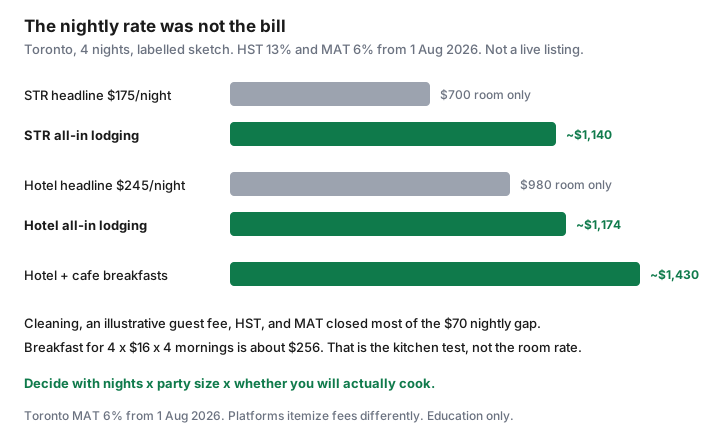
The $70 nightly gap ($280 over four nights) mostly disappeared. Cleaning, a mid-teens guest fee, and tax did the work. Your screen will not match these dollars. The method will: write every line, then add food and getting around. A resort fee or a “destination fee” on a hotel bill is the hotel version of a cleaning fee. If it is not in the rate, add it.
When a kitchen and laundry beat hotel breakfast for a family of four
Food is the line that makes a kitchen worth the cleaning fee. In the sketch, cafe breakfast at $16 × 4 people × 4 mornings is $256. Groceries for the same breakfasts can be a few dozen dollars if someone actually shops. The hotel path becomes about $1,430 once those breakfasts are in it. The rental, with a kitchen used, stays near $1,140 plus groceries.
That save is fictional if you eat out anyway. A family of four that wants restaurants, a one-night stay, or a cleaning fee of $180 on a two-night booking will not “win” with a kitchen. Laundry matters on trips longer than a week, or with small children, when the alternative is a hotel laundry or a second suitcase. It does not matter on a Friday-to-Sunday city break.
Run the food line honestly: which meals you will cook, what those groceries cost in that city, and who will cook them. A kitchen nobody uses is a cleaning fee you paid to look practical.
Location and transit: downtown hotel walkability vs suburban STR parking
A downtown hotel you can walk out of is a different product from a suburban rental with a parking pad and a bus. Price the difference in the same currency as the room.
- No car, city centre, one or two nights. Walkability and a front desk usually beat a cheaper nightly rate across the river. Add the rideshare both ways, late at night, for the whole party.
- Car already on the trip. A rental with a driveway can beat downtown parking. Write the parking rate the hotel would have charged. A $45 nightly parking fee for four nights is $180, which is another cleaning fee.
- Transit. Two adults on a day pass, or the rides you will actually take after dinner, belong on the sheet. A rental that is “close to a station” at 11 p.m. with luggage is not close.
If the trip is under about 800 km and you have not decided to fly, the lodging choice sits on top of a different door-to-door number. Use the flight, train, or drive guide first so you do not optimize a hotel for an airport you should not be using.
Cancellation flexibility and host reliability vs brand hotels
Cancellation is part of the price. A hotel flexible rate that costs $20 more a night is the option that lets you wait for a fare dip or a school schedule. A strict host policy that keeps the cleaning fee and the first night is a fare you already ate. Read the date the trip becomes non-refundable, in your time zone.
Reliability is the 11 p.m. problem. A brand hotel has a desk. A host has a phone and a lockbox. Superhost-style badges are not a warranty and not a reason to skip the reviews that mention access, heat, and whether the bed count matches the listing. For a middle-aged household travelling with parents or children, a failed check-in is the expensive outcome. Pay for the desk when the arrival is late, the building is unfamiliar, or nobody in the party wants to troubleshoot a keypad.
Platforms and hotels both move inventory. Book the thing whose cancellation date you can live with. If you are still comparing flights, do not take a non-refundable rental “to hold the dates” unless the hold is cheaper than being wrong. The flight-window guide is the other half of that timing.
Provincial quirks: QC lodging tax, AB tourism levy, ON MAT, BC PST+MRDT
The same room rate is a different tax stack by province. These are guest-facing rates read 23 Sep 2026. Confirm the city. A national average does not exist.
| Place | What stacks on a short stay | Read on |
|---|---|---|
| Toronto, Ontario | HST 13%. Municipal accommodation tax 6% for stays beginning 1 Aug 2026 (temporary 8.5% ended). City says HST applies on the MAT. Other Ontario cities set their own MAT. Toronto’s tax is on transient stays, generally not on a continuous stay past the city’s threshold (the bylaw targets shorter stays). | City of Toronto MAT pages, 23 Sep 2026 |
| Vancouver and other B.C. areas | GST 5% plus 8% PST on short-term accommodation. Participating areas add MRDT up to 3%. Vancouver also charges a 2.5% Major Events MRDT from 1 Feb 2023 through 31 Jan 2030, on top of the 3% MRDT. The province’s own example is a $200 room in Vancouver with those layers listed separately. | B.C. accommodation PST bulletin, 23 Sep 2026 |
| Alberta | GST 5%. Tourism levy 6% of the accommodation price for bookings after 31 Mar 2026. Bookings made before 1 Apr 2026 stay at 4%, with a contract exception for some prices fixed on or before 23 Mar 2026. The levy is applied before GST. | Alberta.ca tourism levy, Budget 2026 |
| Québec | GST 5% and QST 9.975%, plus the tax on lodging. A widely applied rate in designated tourist regions is 3.5%. Confirm the municipality on Revenu Québec before you treat 3.5% as universal. The lodging tax is not the QST. | Confirm Revenu Québec for the town; do not copy a booking-site footnote blindly |
A Vancouver hotel can look “only” like 8% PST until MRDT and the major-events tax show up. An Alberta booking made after 31 March 2026 is a 6% levy, not the 4% figure still floating around older posts. Toronto in summer 2026 is 6%, not the temporary 8.5%. Write the date of the stay on the sheet so you do not apply last year’s rate.
Decision rule: nights × party size × need for kitchen before you default to either
Default to neither. Score the stay in one line: nights × party size × kitchen.
- 1–2 nights, one or two adults, city centre, no cooking. Hotel. The cleaning fee has nothing to amortize, and walkability is the product.
- 4 or more nights, four or more people, and you will cook at least one meal a day. Run the rental all-in, including tax. The sketch above is the shape of a win, not the size of yours.
- Kitchen listed, restaurants planned. Hotel, unless parking or a second bedroom is the actual reason for the rental.
- Late arrival, older relatives, or a lockbox you do not trust. Pay for a desk.
- Non-refundable rental while flights are still moving. Do not. Match the cancellation date to the flight decision.
Then add the medical note in one sentence, not a second project: provincial plans pay a thin daily amount outside Canada, and a domestic trip can still be out-of-province. The method is the Insurance guide, why provincial plans barely cover you abroad. Do not let a lodging page become a policy.
Sources & date stamps
- City of Toronto, Municipal Accommodation Tax pages — 6% for stays beginning 1 Aug 2026 after a temporary 8.5% rate; HST applies on the MAT. Used 23 Sep 2026.
- Government of British Columbia, PST on accommodation — 8% PST, MRDT up to 3%, Vancouver Major Events MRDT 2.5% through 31 Jan 2030. Used 23 Sep 2026.
- Alberta.ca, tourism levy — 4% before 1 Apr 2026 bookings; 6% after, with the 23 Mar 2026 contract note. Used 23 Sep 2026.
- Québec tax on lodging — confirm the municipal rate on Revenu Québec. A 3.5% figure is common in designated regions and is not a substitute for the local page.
Frequently asked questions
Why does an Airbnb look cheaper than a hotel and then not be?
The search card often shows a nightly rate before cleaning, the guest service fee, GST or HST, and a municipal tax such as Toronto’s 6% MAT. A labelled four-night Toronto sketch on this page put a $175 rental and a $245 hotel within about $35 after those lines. Your checkout will differ. Unbundle it.
Does Toronto still charge 8.5% accommodation tax?
Not on stays beginning 1 August 2026. The City of Toronto says the temporary 8.5% increase ended and the municipal accommodation tax is 6%. HST still applies, including on the MAT. Other Ontario cities set their own rate.
When does a kitchen actually save money?
When the party will cook, and the stay is long enough that grocery savings beat the cleaning fee. Four people, four mornings, at $16 cafe breakfasts, is about $256 in the sketch. A two-night trip with a $140 cleaning fee and restaurant plans does not clear that test.
Are Alberta and B.C. the same hotel tax?
No. Alberta is GST plus a tourism levy of 6% on accommodation booked after 31 March 2026 (4% if you booked earlier). B.C. is GST, 8% PST, MRDT up to 3% where it applies, and in Vancouver an extra 2.5% major-events tax through 31 January 2030.
Is a short-term rental always more flexible?
No. A strict host policy can keep the cleaning fee and the first night. A hotel flexible rate is sometimes the cheaper option once you value being able to cancel. Read the deadline before you pay.