
Travel · Canada
All-Inclusive Mexico vs Book-It-Yourself from Canada: A True Cost Framework
One household books the charter because that is what winter looks like. Another books flights and a condo because a blog said do-it-yourself is always cheaper. Neither one priced the same seven nights. The deposit is where the unpriced version becomes permanent.
This is a Canada-origin comparison: the winter leisure market out of Canadian airports, in Canadian dollars. It is not a U.S. Cancun list. Medical insurance is not a line we shop here. Buy it with the Insurance guide, why provincial plans barely cover you abroad, and drop that premium beside both columns so it does not pretend to be part of the resort.
Disclosure: Sun-destination package quotes and hotel booking sites are an offer type. Saving Optimizer may earn a commission if we later add partner links. We do not claim a partnership with any tour operator or resort. The dollars are a labelled sketch, not a live package. Travel medical is an Insurance decision. Education only.
Key takeaways
- Price the package door to door: flights, transfers, the room, meals, drinks, tips, and anything the quote calls extra. Then put travel medical beside it, not inside it.
- Build the DIY stack in Canadian dollars after FX: flights, lodging all-in, food, local transport, activities.
- A labelled seven-night sketch for two adults put the package plus a tip allowance at about $2,590 and a restaurant-heavy DIY week at about $2,880. Simpler food and a cheaper flight flipped it.
- Canadian winter charters win when the only DIY flights connect through the United States or the hotel’s package rate is genuinely below the public rate plus a flight.
- May–June and September–November are when both columns usually fall versus Christmas-to-March-break and midsummer. September and October still need a weather and flexibility check.
- If you will not drink the included alcohol, or the buffet cannot feed the household, rerun the food line before you assume the package is the value.
Price the package door-to-door: flights, transfers, tips, resort fees, travel medical note
A package quote is a door-to-door number only after you add what the PDF left out. Start with the operator total for the party, for the room you would accept, on the dates you can travel. Then add:
- Transfers, if they are not in the quote. A “free shuttle” that is a paid upgrade is a transfer.
- Tips. Many all-inclusives still run on cash tips for housekeeping, the club, and bags. Resorts differ, and some quotes say gratuities are included. Read that line. A planning sketch used here is USD $10 per adult per day, not a rule and not a minimum. For two adults over seven days that is USD $140. At a placeholder 1.36 CAD per USD (not a live rate; convert the day you book) that is about $190 CAD.
- Resort or facility fees if you are looking at a hotel rate dressed up as a package. A real charter package usually folds the room in. Ask.
- Travel medical, as its own number, same policy beside DIY. Do not let the operator’s checkbox be the only time you think about it. Provincial caps are small. The Insurance page has the caps.
In the sketch, a quoted package of $2,400 CAD for two adults, seven nights, flights and transfers included, plus the $190 tip allowance, is $2,590 before medical. If your quote already includes gratuities, do not add the $190 twice.
DIY stack: flights + hotel/Airbnb + food + transport + activities in CAD after FX
DIY is the same week in five lines, all in Canadian dollars. Convert peso or U.S. dollar prices at the mid-market rate, then add the FX method you will actually pay — the travel-money guide. A 2.5% card fee on a week of spend is part of DIY, not a rounding error.
| Line | Package path | DIY path |
|---|---|---|
| Flights | Inside the $2,400 | $980 |
| Lodging, all-in | Inside the $2,400 | $1,150 after tax and FX. Use the lodging sheet. |
| Food and drinks | Included, plus the tip sketch | $70 a day for the household × 7 = $490 |
| Transfers or local transport | Included in this sketch | $80 |
| One excursion | Not in the package | $180 |
| Tips | about $190 | Smaller if you are not in a tip-heavy resort. Left out of the $2,880 so the food line does the work. |
| Total before medical | about $2,590 | about $2,880 |
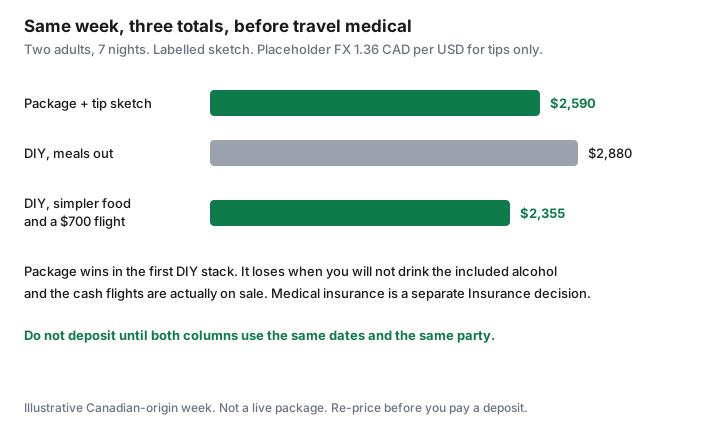
Change two assumptions and the winner moves. Food at $35 a day for the household is $245, not $490. Flights at $700 instead of $980 remove another $280. DIY becomes 700 + 1,150 + 245 + 80 + 180 = $2,355, under the package, before you value leaving the resort. If you will not change those two lines, the package is the cheaper week in this sketch. Write your lines. Do not inherit ours.
When charter/sun packages beat DIY because of Canadian leisure capacity
Canada’s winter leisure market is a capacity fact, not a slogan. Direct charter and scheduled leisure flights from Toronto, Montreal, Vancouver, Calgary, and other cities into Cancun, Puerto Vallarta, and similar airports exist because operators sell the package. DIY wins on a spreadsheet and loses in a terminal when the only reasonable cash flights connect through the United States: a transit rule, a bag that must be rechecked, and a missed connection that is your problem if the tickets are separate. See the passenger-rights guide before you build a connection on two bookings.
A package also wins when the operator’s hotel rate, bundled, is below the public rate plus a flight you can actually get nonstop. It loses when you are paying for a buffet and a beach you will leave every day, and the condo plus a grocery store is the trip you wanted. Sun-destination operators (the large Canadian ones and the airline vacation brands) are an offer type. Get two quotes for the same room category and dates. This page will not rank them.
Shoulder season (May–June, Sep–Nov) where both options drop
Both columns drop when Canadian demand drops. May and June, and September through November, are the shoulder against Christmas-to-March-break pricing and against July and August holidays. Price the same resort, same party, in a shoulder week and in the week you thought you had to travel. The gap is sometimes the whole “DIY saves money” story: you did not need a different booking method, you needed a different week.
September and October on the Caribbean and Gulf coast are also hurricane season. A cheaper week that you cannot insure, or that you will not enjoy if you are watching a forecast, is not cheaper. Trip-cancellation wording and travel medical sit on the Insurance side of this site. Read them before you treat a shoulder fare as found money. If your dates are March break because of school, stop hunting a shoulder fantasy and compare package versus DIY inside that week only.
Alcohol, dietary needs, and kids’ clubs that change the value equation
The package price assumes you will use what is included. Alcohol is the largest of those assumptions. A household that does not drink is paying for other people’s drinks in the rate. Rerun DIY with your real food number, as in the $35-a-day case. If that case wins, the package was a beverage plan.
Dietary needs cut the other way. A buffet that cannot feed a medical diet, a child who will not eat the menu, or a household that wants markets and small restaurants will not extract the “included food” value. Kids’ clubs cut back toward the package when the alternative is paying for care and activities every day, and the children are the age the club actually takes. Read the ages. A club that starts at four does nothing for a toddler, and a teen who will not stay on property does not make an all-inclusive cheaper.
Write one sentence before you deposit: who eats and drinks the inclusion, and who needs to leave the gate. If the sentence is “everyone, all day,” the package column deserves to win a close race. If the sentence is “breakfast and the beach, then we are gone,” build DIY.
Spreadsheet template: package quote vs DIY line items before you deposit
Fill this before a deposit. Same dates, same party, Canadian dollars.
| Line | Package quote | DIY |
|---|---|---|
| Dates and party | ||
| Flights | Included? Which airports? | |
| Lodging, all-in | Room category | Taxes and fees in CAD |
| Transfers | ||
| Food and drinks | Included, or not | Your daily number × nights |
| Tips | Included, or your allowance | |
| Activities | ||
| FX cost on foreign spend | Usually small | See the FX guide |
| Travel medical (separate) | Same policy | |
| Total |
Deposit only when one column wins on the total and on the sentence about how you will spend the day. A cheaper column you will not enjoy is not the save. A dearer column that includes the nonstop and the meals you will actually eat can be.
Sources & date stamps
- Labelled sketch on this page — $2,400 package, USD $10 per adult per day tips at a placeholder 1.36 CAD/USD, DIY lines as shown. Not a live operator quote. Built 23 Sep 2026.
- Global Affairs Canada, travel.gc.ca — destination advice, including weather and entry information, is the official trip brief. Used as the place to check a shoulder-season week, not as a price source.
- Saving Optimizer Insurance guide on provincial out-of-country caps — medical premium stays out of both totals until you choose a policy.
Frequently asked questions
Is an all-inclusive Mexico trip cheaper than booking it yourself from Canada?
Sometimes. In the labelled seven-night sketch for two adults, the package plus a tip allowance was about $2,590 and a restaurant-heavy DIY week was about $2,880. Drop the food budget and the flights and DIY fell to about $2,355. Price your dates. Do not inherit the sketch.
What do people forget on the package?
Tips, if gratuities are not included; transfers that were optional; and travel medical, which is not the resort. A planning tip sketch of USD $10 per adult per day is not a resort rule. Read the quote.
When do charter packages beat DIY?
When a Canadian nonstop is bundled cheaper than the flights you can buy, or when DIY means a U.S. connection and separate tickets. They lose when you will not use the drinks and the buffet and you would rather have a kitchen and a town.
Are May, June, and the fall actually cheaper?
Both packages and DIY cash prices are usually lower in May–June and September–November than in Christmas-to-March-break or July–August. September and October can also be storm season. Check travel.gc.ca and your cancellation wording before you call the cheapest week the best week.
Should the resort sell me medical insurance?
Treat that checkbox as a prompt, not a policy. Provincial plans pay a thin daily amount abroad. Compare a travel-medical certificate on its own maximum, deductible, and stability wording. That work is on the Insurance guide, not in the package deposit.