
Housing · Canada
B.C. 2026 rent increase limit (2.3%): notice rules and how tenants save
B.C. tenants sign a text that says “rent is going up 5% in 60 days” because it arrived from the building email. The Residential Tenancy Branch’s public rule is narrower: for 2026 the residential limit is 2.3%, the landlord needs three full months’ written notice on Form RTB-7, and rent can rise only once every 12 months. The page was last updated 27 Aug 2026 (verified 20 Sep 2026). The 2027 limit is already posted at 2.2%.
This is a savings reading of those rules. It is not a ruling on manufactured-home parks, rent-geared-to-income, or a additional-rent-increase application.
Disclosure: There is no natural affiliate product in a rent-increase explainer. Saving Optimizer does not claim RTB or landlord-software partnerships. This is educational money math, not legal advice. Confirm notices on gov.bc.ca and with the Residential Tenancy Branch or a licensed advisor.
Key takeaways
- 2026 residential limit: 2.3%. Landlords cannot round up. $2,200 × 2.3% = $50.60 — a $51 notice is over.
- Three full months on Form RTB-7. The month you receive the notice does not count.
- Once every 12 months. Unused percentage from last year does not stack onto this year.
- If utilities or fees are included in rent, costs going up does not unlock a bigger rent hike. Agreed fees cannot be quietly raised.
- You can refuse a voluntary above-limit deal. Improper notice can slide the effective date. Overpayments can be deducted from future rent in writing.
2026 limit in plain language with example rents
The 2026 maximum is the 12-month average percent change in B.C. all-items CPI ending July 2025, published as 2.3% (provincial news release 2025HMA0067-000786). It cannot take effect before 1 Jan 2026. A notice served in late 2025 for a 1 Jan 2026 effective date uses the 2026 limit, not 2025’s 3%.
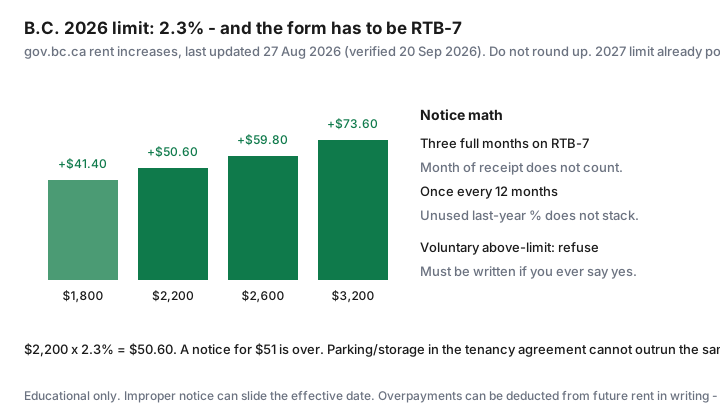
Manufactured-home park tenancies use 2.3% plus a proportional amount for some local levies and regulated utilities — a different worksheet. Co-ops, some assisted living, and rent-geared-to-income are often outside this residential limit. Confirm coverage.
Three full months’ notice and Form RTB-7
The notice must be the RTB-7 PDF, must show the exact dollar amount and the effective date, and must give three full months. “90 days” is the wrong slogan. A notice received 10 March does not start the clock in March; April, May, and June are the three full months, so 1 July is the usual earliest first-of-month effective date if rent is due on the 1st. A short notice does not become lawful on the date printed on it — the Act’s timing rules generally slide it to a date that complies. A WhatsApp “FYI rent is $50 more in June” is not RTB-7.
Once-per-12-months rule
Rent cannot increase until 12 months after it was set at the start of the tenancy or last legally increased. A new landlord or an assignment does not reset that clock. If last year the landlord took only 1% of a 2% limit, they cannot take the leftover 1% plus this year’s 2.3%. They get this year’s limit, once.
Utilities and fees: what cannot quietly rise with rent
RTB: if utilities and other fees are included in the rent, the landlord still cannot increase rent beyond the annual limit just because their costs went up. Utilities and other fees can be increased only with the tenant’s agreement, whether they sit in the tenancy agreement or a separate agreement. Get the actual bill before you pay a “share.” Parking and storage that are in the tenancy agreement cannot exceed the same annual limit — a theme we also cover in B.C. deposits. A new “amenity fee” that is really rent is the pattern to challenge.
Voluntary above-limit agreements tenants can refuse
Landlords may ask. You may say no. If you ever say yes, RTB wants it in a written agreement that shows the exact dollar amount, the effective date, any conditions, and your signature. Do not trade a 6% increase for a promised dishwasher that is not in the same document. For negotiation tone and comps, use the renewal scripts — B.C. still has a percentage cap many Ontario exempt units do not.
How to respond to an improper notice
You do not have to pay an increase that is above the limit or that did not get proper notice. Write: the lawful dollar amount, the earliest lawful date, and that you will pay current rent until then. Keep the RTB-7. If they insist, dispute resolution is the Branch process. If you already overpaid, RTB says you can deduct the overpayment from future rent and should explain why in writing. Do not deduct a number you cannot show. Safety issues are not a spreadsheet — leave if you need to.
Budget planner for next year’s increase
| Current rent | 2026 max (+2.3%) | 2027 sketch (+2.2% more) |
|---|---|---|
| $1,800 | $1,841.40 | $1,881.91 |
| $2,200 | $2,250.60 | $2,300.11 |
| $2,600 | $2,659.80 | $2,718.32 |
| $3,200 | $3,273.60 | $3,345.62 |
Put the 2026 number in the sinking fund the month the RTB-7 arrives, not the month it bites. If the lawful increase still breaks the budget, price a move with DIY vs movers before you bluff.
Sources & date stamps
- Government of B.C., Rent increases — 2026 limit 2.3%; 2027 limit 2.2%; three full months; RTB-7; once per 12 months; no rounding up; utilities/fees; voluntary above-limit; deducting overpayments (updated 27 Aug 2026; used 20 Sep 2026).
- BC Gov News 2025HMA0067-000786 — 2026 limit tied to B.C. CPI; manufactured-home note; three months’ notice.
- Residential Tenancy Act, ss. 41–43 themes — timing, notice, amount (read the statute for your facts).
Frequently asked questions
What is the B.C. rent increase limit for 2026?
2.3% for residential tenancies covered by the Residential Tenancy Act (gov.bc.ca rent increases, verified 20 Sep 2026). Landlords cannot round the dollar amount up. The 2027 limit is published at 2.2%.
What notice does a landlord have to give?
At least three full months, in writing, on Form RTB-7, with the exact dollar amount and effective date. The month you receive the notice does not count as one of the three. A text message is not the form.
Can my landlord raise parking or hydro to get around 2.3%?
If those amounts are included in rent, higher costs do not unlock a larger rent increase. Fees in the tenancy agreement generally cannot outrun the annual limit. Separate side agreements deserve a careful read. Confirm with the RTB if a new “fee” looks like rent.
Do I have to agree to a higher increase?
No. Voluntary above-limit deals must be written if you ever accept one. You can refuse and stay on the lawful path.
Is this legal advice?
No. It is a date-stamped savings explainer. Improper notices and disputes go to the Residential Tenancy Branch or a licensed advisor.