
Events · Canada
Holiday Tipping in Canada: Mail Carriers, Building Staff, Teachers and More
Holiday tipping in Canada is a custom, not a rule, and there is no official amount. The practical approach is to write a short list of the people who help you through the year, set one amount or one kind of gift for each, and add up the list before December. Some of those people work under employer rules. Canada Post's Code of Conduct, for example, lets employees accept incidental gifts of nominal value and gives a rule of thumb of no more than $100, while asking them to refuse gifts that create a perceived conflict of interest. Schools and condo management companies have their own policies, so a card, a small gift or a group gift is often the safest choice. For someone you employ, such as a nanny, the CRA treats cash gifts as taxable.
Key takeaways
- There is no official holiday tip amount in Canada. Set one amount per person on a written list.
- Canada Post's Code of Conduct: incidental gifts of nominal value only, with a rule of thumb of no more than $100.
- Teachers and child-care staff: school and centre policies vary; a card, a small gift or a class group gift is common.
- Building staff: ask your property manager whether there is a staff fund or a policy.
- If you employ someone, such as a nanny, the CRA says cash gifts are a taxable benefit; non-cash gifts up to $500 a year are not.
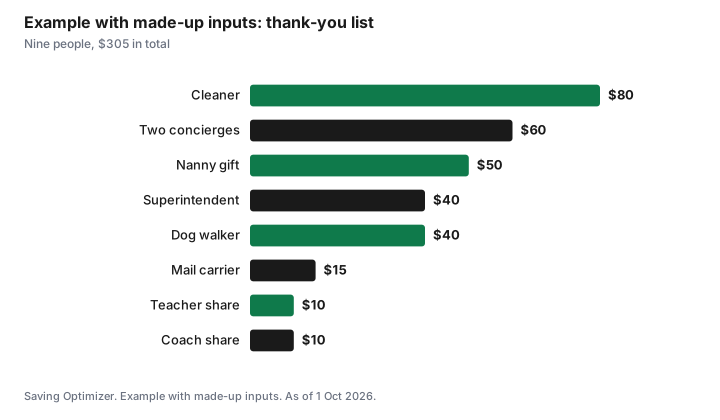
- Example with made-up inputs: nine people on the list, $305 in total.
Who people thank at the holidays
The list depends on where you live and what services you use. Write down anyone who regularly helps your household. Then decide, person by person, whether you will give cash, a gift card, a small gift, a card with a note, or nothing. A handwritten note is free and is often valued more than people expect.
| Person | Common ways to say thank you | Check first |
|---|---|---|
| Mail carrier | A card, a small gift or treats | Canada Post's Code of Conduct |
| Condo or apartment staff (concierge, superintendent, cleaners) | Cash or a card to each person, or a contribution to a staff fund | Your building's policy |
| House cleaner | A gift or an extra payment | Your agreement with them |
| Nanny or babysitter | A gift or a bonus | CRA rules if you are the employer |
| Child-care staff and teachers | A card, small gift or class group gift | School or centre policy |
| Coaches and instructors | A card or team group gift | Club policy |
| Hairdresser, barber, nail technician | A gift or a larger tip at the last visit before the holidays | Salon policy |
| Regular delivery person, dog walker, snow removal | A card, a gift card or cash | Their employer's policy |
| Municipal waste and recycling collectors | A card or a note | City and contractor policies |
For year-round tipping at salons, see tipping hairdressers, barbers and nail techs.
Employer gift rules: the example of postal workers
Many people who serve the public work under a code of conduct that limits gifts. Canada Post's Code of Conduct says employees can accept incidental gifts, customary hospitality and other benefits of nominal value that can be reciprocated, and it gives a good rule of thumb of no more than $100. The same code tells employees to refuse gifts from customers, competitors, contractors and suppliers that create a perceived conflict of interest. For a householder, that means a modest card or treat for your carrier fits the code, and a large cash gift may not.
Municipal employees, public school staff and employees of large companies are often under similar codes. You do not need to know the details of every policy. Keep gifts modest, and if you want to give more, give to a group fund the employer has approved or write a note to the person's manager praising their work. That note can matter more to the person than the gift.
Cash versus gifts
Cash and gift cards are useful because the person can spend them as they wish, and they are easy to give to someone you barely know, such as a building cleaner. A gift shows more thought but may not suit the person. A practical rule: cash or a gift card for people whose employer allows it and whom you see often, and a small gift or note for people whose employer limits gifts.
| Option | Works well for | Watch out for |
|---|---|---|
| Cash in a card | Building staff, cleaners, snow removal | Employer policies that limit cash |
| Gift card | People you know a little | Fees on mall or prepaid cards in some provinces |
| Small gift or treats | Mail carriers, teachers, coaches | Allergies and dietary rules |
| Handwritten note | Anyone, including people who cannot accept gifts | Nothing; it costs nothing |
| Group gift | Teachers, coaches, building staff | Someone must collect and organize |
If you give gift cards, prefer an ordinary retailer card over a mall or prepaid network card; the guide to gift card rules by province explains why.
Building staff and condo norms
In a condo or rental building, ask the property manager or the board whether there is a policy. Some buildings collect a holiday fund that is shared among staff, which avoids each resident deciding separately. Others leave it to residents. If you give individually, give to each person who helps you, not only the one you see most often, and include the night or weekend staff if your building has them.
Teachers and caregivers
Schools and child-care centres often set gift guidelines for families, and some discourage gifts of value. A class group gift, where families each contribute a small amount for one shared gift card or present, keeps the cost per family low and treats every teacher the same. A card written by the child is common and welcome.
If you are the employer: nannies and household staff
If you employ a nanny or other household worker, you are the employer. Under the CRA's policy on gifts and awards, cash and near-cash gifts to an employee are a taxable benefit, while non-cash gifts and awards with a total value of up to $500 a year, including tax, are not taxable for an arm's-length employee. A holiday cash bonus for a nanny is therefore employment income and goes through payroll. The nanny payroll guide covers deductions if you employ someone directly.
Budget
Holiday thank-yous fit best as one line in the December plan. Add up the list before you buy anything else, so the people who help all year are not the ones squeezed at the end. If the total is more than you can spend, switch some people from cash to a card with a note, or join a group gift.
Example with made-up inputs: a household's list
These numbers are an example with made-up inputs. They are not recommended amounts. A family in a condo lists nine people: a mail carrier, two concierges, a superintendent, a cleaner, a nanny, a teacher, a hockey coach and a dog walker.
| Person | Plan | Amount |
|---|---|---|
| Mail carrier | Treats and a card | $15 |
| Two concierges | Card with cash, $30 each | $60 |
| Superintendent | Card with cash | $40 |
| Cleaner | Extra amount at the last December visit | $80 |
| Nanny | Non-cash gift (bonus would go through payroll) | $50 |
| Teacher | Class group gift share | $10 |
| Hockey coach | Team group gift share | $10 |
| Dog walker | Gift card | $40 |
| Total | $305 |
A holiday thank-you plan
- Write the list of people in November.
- Check policies: building, school, club and your own role as an employer.
- Choose cash, gift card, gift, note or group gift for each person.
- Add up the list and put it in your December budget.
- Get cash or gift cards early so you are not caught short.
- Write the cards; a few sentences about what the person does well are the part people keep.
The December spending plan puts thank-yous beside gifts, food and travel.
Sources
- Canada Post, Code of Conduct, canadapost-postescanada.ca, as of 1 Oct 2026. Incidental gifts, customary hospitality and benefits of nominal value that can be reciprocated, rule of thumb no more than $100; refuse gifts that create a perceived conflict of interest.
- Canada Revenue Agency, Gifts, awards, and long-service awards, canada.ca, as of 1 Oct 2026. Cash and near-cash gifts taxable; non-cash gifts and awards up to $500 a year including taxes.
- The household, people, amounts, table and chart in the example are an example with made-up inputs.
Frequently asked questions
How much should I tip my mail carrier at Christmas in Canada?
There is no official amount. Canada Post's Code of Conduct lets employees accept incidental gifts of nominal value, with a rule of thumb of no more than $100, and asks them to refuse gifts that create a perceived conflict of interest. A card, treats or a small gift fits that code.
Should I tip my condo concierge at the holidays?
It is a custom, not a requirement. Ask your property manager whether the building has a staff fund or a policy. If you give individually, include each staff member who helps you.
Can I give my child's teacher a gift card?
School policies vary, and some limit gifts of value. A class group gift or a card written by your child is a common choice. Check your school's guidance.
Is a holiday bonus for my nanny taxable?
Yes, if you are the employer. The CRA treats cash and near-cash gifts to employees as a taxable benefit. Non-cash gifts and awards up to $500 a year, including tax, are not taxable for an arm's-length employee.
Is cash or a gift better as a holiday tip?
Cash or an ordinary store gift card suits people you see often whose employer allows it. A small gift or a note suits people whose employer limits gifts. A handwritten note works for anyone.
Researched and drafted with AI assistance and fact-checked against official Canadian sources. How we create content.
Disclosure: Saving Optimizer may earn a commission if a partner link is added later, such as a gift card or cash-back offer type. No partnership is claimed on this page. Education only. This is not tax advice.