
Food & Groceries · Canada
Family grocery budgeting in Canada: a repeatable weekly meal system
Family food costs spike from snacks, duplicate buys, and the 5:30 p.m. question “what’s for dinner?” that becomes a drive-through. Tips do not survive soccer night. A repeatable weekly meal system does: a dollar target, flyer proteins, one batch cook, boring lunches, a monthly Costco run, and a 15-minute Sunday meeting.
This is the family layer on top of the Canadian weekly grocery system. Same Flipp and loyalty tools. More people, more lunchboxes, less improvisation.
Disclosure: Costco memberships, meal-kit trials, grocery gift cards, and cashback portals are offer types. Saving Optimizer may earn a commission if we later add partner links. We do not currently claim those partnerships. Use this system without clicking anything.
Key takeaways
- Set a weekly food-at-home number from take-home pay and four weeks of receipts. National averages are context, not your budget.
- Kids’ meals can still follow the flyer if the format stays familiar.
- Batch one protein on the weekend. School lunches are leftovers and store-brand staples, not premium packs every day.
- Split labour: one plans, one shops — or rotate. Two adults wandering a Superstore is not a date.
- Monthly Costco + weekly discounter is the default Canadian family rhythm. Review 15 minutes every Sunday.
Set a household food target from take-home pay
Statistics Canada’s Survey of Household Spending for 2023 (Daily, 21 May 2025) put average spending at $8,659 on food from stores and $3,351 on restaurants ($12,046 food total). StatsCan Plus (24 Jul 2025) noted meat at $1,544 and dairy and eggs at $1,203 inside that store cart. Those figures mix household sizes and cities.
Canada’s Food Price Report 2026 (Dalhousie et al., 4 Dec 2025) says a model family of four — adults 31–50, a teen boy, a younger girl — may spend up to $17,571.79 on food in 2026, up to $994.63 more than 2025, with a 4–6% food-price forecast. That is a forecast ceiling for that age mix, not a report card.
CPI context (Statistics Canada Daily, 14 Sep 2026): food from stores +2.8% year over year in August 2026; still +29.0% versus August 2021. The bill is high because the last five years were high, not because you failed a coupon class.
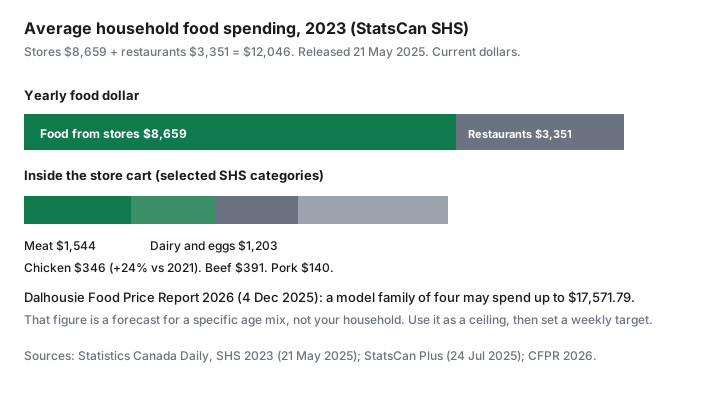
Planning heuristic (labelled, not official): start at 10–15% of take-home for food at home, plus a separate restaurant cap. Worked example: $7,200/month take-home, 12% = $864/month ≈ $200/week stores. If receipts already show $280, do not crash to $200 in seven days. Cut restaurant leaks and duplicate snacks first, then 5% a month.
GST/HST: basic groceries are generally zero-rated; many snacks, beverages, and restaurant meals are taxed. Lunchables-style packs and café muffins are a tax plus a premium pack. A cheese sandwich is boring on purpose.
Kid-friendly meals that still use flyer proteins
Lock four dinner formats: taco night, pasta, rice/bowl, roast-and-repeats. The flyer chooses chicken, pork, beans, or eggs — not a new cuisine. If salmon is $18/lb, it is not salmon week unless it is a birthday.
| Night | Format | Flyer move | Lunch echo |
|---|---|---|---|
| Sun | Roast chicken + potatoes | Whole bird or thighs on special | Meat in sandwiches |
| Mon | Tacos / wraps | Same chicken, shredded | Bean wraps |
| Tue | Pasta + frozen veg | Ground meat if cheap; else lentils | Leftover pasta thermos |
| Wed | Eggs + toast + salad | Eggs are the protein | Hard-boiled eggs |
| Thu | Rice bowls | Flashfood/FoodHero meat if on route | Rice + frozen veg |
| Fri | Eat-the-fridge | No new protein | Whatever is left |
| Sat | Batch chilli or soup | Beans + sale remnants | Freeze two lunches |
One “kid brand” snack is allowed if it prevents a mutiny. The rest of the cart stays store brand. That is the deal.
Batch cooking for busy weeknights
Pick one weekend protein and cook twice what you need. Freeze in meal-size bags, labelled. A slow cooker or a sheet pan is enough. You are not building a meal-prep brand. You are making Thursday possible without Uber Eats.
Surplus-app meat belongs in this step the same night. See Flashfood vs TGTG vs FoodHero.
School lunches without premium packs
Premium lunch kits are convenience food with a cartoon. Build a boring matrix: grain + protein + fruit + one fun item. Store-brand yogurt, leftover chicken, apple, handful of crackers. Water in a bottle you already own. If a cafeteria day is cheaper than a packed lunch in your school, use it on the chaotic weekday and pack the others.
Two-adult shop division of labour
- Adult A: Sunday 20 minutes (fridge, Flipp, loyalty, surplus check).
- Adult B: store with the list, no “while I’m here” extras except the one flex item already written down.
- Rotate monthly so the planner also knows what the store is like.
- Kids can help clip Flipp at the table. They cannot negotiate the cereal aisle unsupervised.
Monthly Costco + weekly discounter rhythm
Costco once a month for items you finish: oil, coffee, frozen berries, toilet paper, cheese you freeze or portion, maybe chicken if the unit price wins. Weekly No Frills / FreshCo / Food Basics / Maxi / Super C for produce and fill-ins. That is the rotation. Executive membership is optional and mathematical — run eligible spend before you pay $130.
Giant yogurt you throw out is not a deal. If your household will not eat 3 kg of Greek yogurt, buy the discounter tub.
Review meeting: 15 minutes every Sunday
- What did we throw out? Buy less of that.
- What takeout happened, and was it a planning failure or a genuine time failure?
- Receipt total vs target. No speeches. One adjustment.
- Next week’s five dinners and who shops.
- Once a month: Costco list and whether Executive or a meal-kit trial is still a live question.
Four weeks makes a baseline. Twelve weeks makes a habit. The goal is fewer 5:30 p.m. surprises, not a perfect $17,571 forecast.
Sources & date stamps
- Statistics Canada Daily, Survey of Household Spending 2023 (21 May 2025).
- Statistics Canada Plus grocery-bill breakdown (24 Jul 2025).
- Statistics Canada Daily, CPI August 2026 (14 Sep 2026).
- Canada’s Food Price Report 2026, Dalhousie University et al. (4 Dec 2025).
Frequently asked questions
How much should a Canadian family spend on groceries?
There is no official ‘should.’ Statistics Canada’s 2023 Survey of Household Spending (released 21 May 2025) found average food-from-stores spending of $8,659 per household — all household sizes mixed. Dalhousie’s Food Price Report 2026 (4 Dec 2025) forecasts up to $17,571.79 for a specific family-of-four model, including a broader food definition. Set a weekly number from your take-home pay and your receipts, not from a national average.
What share of take-home pay is reasonable for food?
A planning heuristic many coaches use is roughly 10–15% of take-home for food at home, then a separate cap for restaurants. That is a starting range, not a Statistics Canada requirement. If rent is crushing, the food target has to flex. Track four weeks before you shame anyone.
How do I feed kids from flyer proteins?
Keep the cuisine stable (tacos, pasta, rice bowls, roast chicken) and swap only the protein that is on sale. Kids notice texture more than whether it was thighs or a roast. Repeat winners; do not debut two new dinners in one week.
Is a meal kit cheaper than this system?
Usually not for a family of four, once you count servings. A kit can be a relief week when someone is sick. Treat trials as a backup, not the plan.
Should both adults shop?
Split roles: one runs Sunday planning and Flipp, the other runs the store with the list — or swap monthly so resentment does not become takeout. One shopper in the store is usually cheaper than two.