
Travel · Canada
Multi-Generation Trips from Canada: Split Costs Fairly Without Blowing the Budget
Grandparents, parents, and teenagers can agree that “a trip together would be nice” and still be stuck the moment a deposit is due. The fight is almost never the island. It is pace, stairs, and who is quietly subsidizing whom. Settle those three on a page before anyone’s card is charged.
The method is for a Canadian household travelling with two other households. Dollar figures in the split example are a labelled sketch so the arithmetic is visible. They are not a quote. Medical rules live on the Insurance hub and are linked, not restated as a product ranking.
Disclosure: Sun-package booking sites are an offer type. Saving Optimizer may earn a commission if we later add partner links. We do not claim a cruise line, resort, or booking-site partnership. Travel medical is an insurance decision. Education only.
Key takeaways
- Choose lodging for the slowest pace and the real mobility limit. Stairs are not a bargain.
- Pick one cost rule: equal by household, room-based, or income-based. Mix them and someone will feel cheated by day three.
- A cruise or an all-inclusive solves pace only when the whole group wants one schedule. Price it against a do-it-yourself week before you deposit.
- Medical and mobility are a checklist. Policies are purchased from the Insurance guides, matched to the oldest traveller and to who paid.
- Fewer flights and shorter transfers beat a cheaper fare. No deposit until the one-page budget names the cancellation rule.
Accessibility and pace constraints that drive lodging choice
The person who walks slowest sets the geography. If a grandparent can do 20 minutes on flat ground and then needs a seat, the hotel is in the neighbourhood where you will eat, not across a highway from the picturesque one. If someone uses a walker, a cane, or cannot do stairs on a bad knee, an elevator or a true ground-floor room is a requirement, not a preference you will “try to get at check-in.” Request it in the reservation, in writing, and re-read the confirmation.
Pace also means the shape of the day. One outing in the morning, a long lunch, and a free afternoon will bore a teenager and save the trip for everyone else. Build the teen outlet on purpose, using the teen guide: a stipend and one activity they chose, inside the radius the group can manage. Do not schedule a second walking tour to keep them entertained. That is how the grandparent’s day gets confiscated.
Count rooms from mobility, not from thrift. A couple who cannot share with grandchildren need their own door. A cheaper inn that forces a parent onto a sofa “just this once” becomes the resentful room. Price the accessible layout first. Then see if the trip still fits the ceiling.
Cost-sharing models: equal split vs room-based vs income-based
Shared costs and personal costs are different piles. Flights from different cities, souvenirs, and optional tours stay with the person who bought them. The shared pot is lodging, a rental car or taxi pool, group groceries, and meals you eat together because the plan said so. Pick one rule for the pot.
| Rule | How the $6,000 splits | When it is the fair one |
|---|---|---|
| Equal by household | $2,000 each household | The groups are similar in size, or you are buying simplicity and everyone has said so |
| Room-based | Each room paid by the people who sleep in it. Car and groceries split per adult. Children’s extras stay with their parents. If two rooms are $2,200 and $1,800 and the remaining $2,000 of shared costs is split across five adults, do that arithmetic on the sheet | Room sizes differ and incomes are close enough that a subsidy would feel strange |
| Income-based | Each household pays its share of the three households’ combined gross income, with a floor. Example shape: 50 percent, 35 percent, and 15 percent, and the floor is high enough that the 15 percent household is not a guest without a vote | One household can pay and wants to, and the others will not accept a vague “we’ll cover you” |
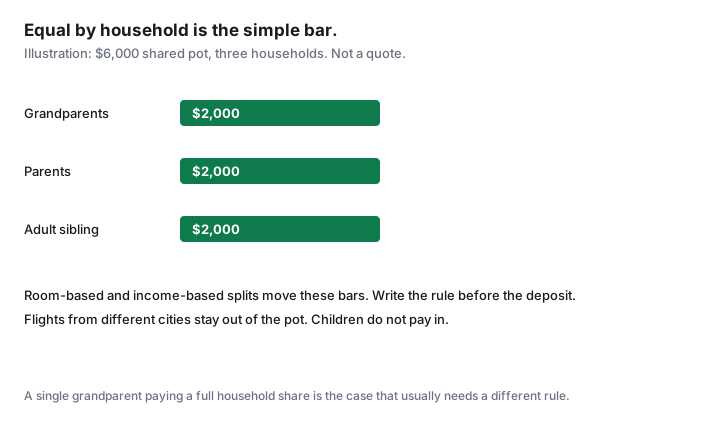
Do not invent a fourth rule mid-week because a dinner was expensive. Side bets (“I’ll get ice cream”) are fine. Changing the pot is a meeting. Children do not pay into the pot. Their parents do, inside whichever rule you picked.
Cruise and all-inclusive appeal vs DIY flexibility for mixed ages
A cruise or an all-inclusive appeals because the pace is designed and the meals are settled. Mixed ages stop negotiating every restaurant. That appeal is real, and it is not the same as “cheaper.” A ship or a resort that moves on its schedule will frustrate a grandparent who wants a quiet afternoon and a teenager who wants a city. Do-it-yourself is the flexible one, and it is the one that collapses if nobody will make a decision before dinner.
Use one comparison, on the same dates, in Canadian dollars. Column A is the package or the cruise fare plus the extras that are not in the headline: drinks, tips, excursions, travel medical, and the flights if they are not included. Column B is flights, bags, lodging, food, local transport, and the same medical line. The Mexico guide and the Caribbean guide are the line items for a sun week. A resort credit is eligible spend, not cash. If the group cannot agree the column before the deposit, you do not have a trip. You have a brochure.
Cabins and rooms follow the mobility section. A guaranteed accessible cabin that is not confirmed is not an accessible cabin. Read the cancellation date on the fare. Group rates that require every name at deposit are how one household’s cold becomes everyone’s loss. The written sheet in the last section is the defence.
Medical and mobility prep checklist (link Insurance for policies)
Travel medical is not a paragraph in a cruise brochure. Provincial plans pay a defined, limited amount for emergency care abroad and do not pay for an evacuation the way a travel policy can. Start with provincial health plans abroad. If the trip is long enough to brush residency rules, read snowbird medical rules even when nobody uses the word snowbird. If someone hopes a credit card certificate will cover the group, read what those certificates actually ask: age, trip length, stability of a condition, and whether that card paid for the trip. This page does not rank cards. A certificate that fails the oldest traveller fails the trip.
Mobility prep, before you deposit:
- Prescriptions in original containers, enough days plus a buffer, and a list in carry-on bags that are not all in one suitcase.
- An airline wheelchair or escort request made with the booking, not at the gate on the day. A paid extra-legroom seat is not a medical device. If a seat is medically required, ask the airline what documentation they want before you buy a Basic fare you cannot change. Fare brands are the Basic versus Standard guide.
- A ground-floor or elevator confirmation, a shower that the person has agreed they can use, and a pharmacy name near the lodging.
- Travel advice for the destination on travel.gc.ca, including any entry rule that applies to the passports in the group. Passport renewal lead time is the passport guide.
- One person who knows how to call the insurer, with the policy number stored outside the traveller’s phone.
Choose hubs with short transfers and fewer connections
Every connection is a walk, a delay, and a missed meal. For mixed ages, the cheapest fare with two connections is often the most expensive day. Prefer a nonstop from the airport the group can actually reach. If the home airport does not have the nonstop, one connection in a single airport, with a long layover, beats two tight ones. Build the layover so the slowest person can use a washroom and sit, not so the schedule looks efficient on a map.
Hubs that work are the ones with the flight pattern you need that season, not a slogan about YYZ, YUL, or YVR. Check the actual nonstop. Then add the cost of getting every household to that airport. A fare that saves $150 and requires a grandparent to change hotels overnight has not saved $150. If the connection breaks, passenger refund rules are the cancellation guide. They do not replace a group plan for where you will sleep.
Written group budget before anyone deposits
One page, shared, before the first deposit. If someone will not put their name on it, they are not ready to travel as a group.
| Line | Write this |
|---|---|
| Dates and the pace rule | One outing, afternoon off, who can skip without guilt |
| Lodging layout | Rooms, elevator or ground floor, who sleeps where |
| Cost rule | Equal, room-based, or income-based, with the dollar split of the pot |
| Ceiling | The all-in number that stops the trip |
| Whose name is on the booking | One household, and how the others reimburse |
| Deposit and cancel date | What is lost on that date, and who covers a household that pulls out |
| Medical | Policy for each person, especially the oldest, bought before the deposit if the deposit is non-refundable |
Send the page around. Silence is not agreement. The household that pays the deposit is the one that will be chasing the others in April. Make that role explicit, or do not volunteer the card.
Sources & date stamps
- Travel.gc.ca — destination advice and the travelling-and-money page are the official pre-departure reads. Medical limits are not copied here; they are dated on the Insurance guides.
- Provincial health coverage abroad, snowbird residency clocks, and credit-card travel medical certificates — see the three Insurance articles linked above. Education only. No card ranking.
- Air passenger refund rules — the cancellation guide, which dates the Air Passenger Protection Regulations on its own page. A group agreement is separate from a tariff right.
- The $6,000 split is an illustration built for this page so three rules can be compared. It is not a measured average cost of a multi-generation trip.
Frequently asked questions
How should three generations split a trip from Canada?
Pick one rule before anyone pays a deposit. Equal split by household is simple and unfair when one household is a couple and another is a single grandparent. Room-based split charges each sleeping room to the people in it and splits shared cars and groceries per adult. Income-based split uses each household’s share of combined income, with a floor so the lowest household still has a vote. Write the rule down.
Who chooses the hotel?
The slowest walker and the person who needs an elevator or a ground-floor room. A cheaper inn with stairs becomes the expensive choice when someone cannot use it. Pace is a lodging decision, not a personality clash to solve on day two.
Is a cruise or an all-inclusive easier for mixed ages?
Easier when one bill and one schedule will stop the group arguing, and a poor fit when half the group wants the afternoon off and the teens want a city. Price the package and a do-it-yourself week on the same dates, in Canadian dollars, before you call either one simpler.
Where do we put travel medical?
On the Insurance hub, not in the package headline. Read the provincial-gap guide, the snowbird guide if the stay is long, and the card-certificate guide for age, trip length, stability, and who paid. This site does not rank cards. Buy the policy that matches the oldest traveller’s real health history, in that person’s name.
What if one household cancels after the deposit?
The written sheet should already say whose name is on the reservation, whether the deposit is recoverable, and how the remaining households cover the room. If that paragraph is blank, do not pay the deposit.