
Technology · Canada
Is a Smartwatch Worth It in Canada? Prices, Cellular Plans, Subscriptions and Battery Life
This post contains Amazon.ca affiliate links. If you buy through them, Saving Optimizer may earn a commission at no extra cost to you.
A smartwatch is worth it in Canada if you will use it every day for fitness tracking, notifications or safety features, and if you match the device to your phone. If you mainly want step counts, workouts and sleep tracking, a fitness band costs less: Google's Fitbit Charge 6 is CA$219.95 on the Google Store, and Google lists a 7-day battery. A full smartwatch starts at $329 for Apple Watch SE 3 and CA$469.99 for Google Pixel Watch 5, and goes past $1,000 for rugged models. Cellular versions cost more and need a monthly add-on from your carrier, and some health features need a paid subscription. Buy the cheapest model that does the things you will actually use.
Key takeaways
- Fitness band: Fitbit Charge 6 at CA$219.95 (Google Store Canada).
- Smartwatch: Apple Watch SE 3 from $329; Pixel Watch 5 from CA$469.99; Apple Watch Series 12 from $549.
- Cellular models need a wireless plan, sold separately.
- Google Health Premium renews at CA$12.99 a month after its trial.
- Battery life ranges from about a day for many smartwatches to about a week for a band.
- Worked example uses made-up figures.
What smartwatches cost in Canada
| Device | Type | Starting price | Notes |
|---|---|---|---|
| Fitbit Charge 6 | Fitness band | CA$219.95 | Google lists 7-day battery life |
| Apple Watch SE 3 | Smartwatch | $329 | Configurations shown at $329, $369, $399 and $439 by size and connectivity |
| Google Pixel Watch 5 | Smartwatch | CA$469.99 | LTE models need a 4G LTE plan, sold separately |
| Apple Watch Series 12 | Smartwatch | $549 | Other case materials and finishes cost more |
| Apple Watch Ultra 4 | Rugged smartwatch | $1,099 | Titanium case |
These are list prices on Apple's and Google's Canadian stores as of 7 Oct 2026. Retailers and carriers often discount watches during Black Friday and Boxing Day; our Black Friday vs Boxing Day tech guide covers the timing, and a previous-generation model is often a better deal than the newest one.
Your phone decides most of the choice
Apple Watch is set up with and paired to an iPhone. Google says the Fitbit Charge 6 works with a compatible phone running Android 11 or later or iOS 16.4 or later. Google says Pixel Watch 5 needs a compatible phone running Android 12.0 or newer. If you might switch phones in the next few years, a band or watch that works with both platforms keeps your options open.
Cellular or not
A cellular (LTE) watch can make calls, send messages and stream music without your phone nearby. Apple says a wireless service plan is required for cellular service, and Google says the same for Pixel Watch LTE models. That means a higher price for the watch itself plus a monthly fee from your carrier for as long as you use it. Plans and fees vary by carrier, so ask yours for the monthly cost before you buy.
Cellular makes the most sense for runners who want to leave the phone at home, for safety if you hike or walk alone, or for a child or older relative who does not carry a phone. For most people who carry their phone everywhere, a non-cellular watch does the same job for less. Our guide to family phone plans explains how add-on lines usually work.
Subscriptions to watch for
Some features sit behind a paid subscription. Google offers Google Health Premium, which renews at CA$12.99 a month after its trial, and Google says some Pixel Watch features require it. Apple sells an Apple Fitness+ subscription for guided workouts. A subscription can change the real cost of a cheaper device, so add it to your math. Trials are easy to forget; our free trial cancel checklist helps.
Battery life: daily charging vs once a week
Battery life is the biggest everyday difference between watches and bands. Apple's compare page lists normal-use battery life ranging from up to 18 hours to up to 50 hours across Apple Watch models, with longer times in Low Power Mode. Google lists 7-day battery life for the Fitbit Charge 6. A watch you must charge daily is harder to wear overnight for sleep tracking, and batteries hold less charge as they age. If you want sleep data, a longer battery, or a habit of charging during your morning shower, matters more than any single health feature. Long battery life also helps on trips, when one less charger to pack and remember is a small but real convenience.
Who gets value from a smartwatch
- Good value: people who work out several times a week and want heart rate, GPS routes and workout history.
- Good value: people who want fall detection or emergency calling for safety.
- Good value: people who use contactless payments, timers and notifications all day.
- Weak value: people who mostly want steps and sleep; a band such as the Fitbit Inspire 3 covers that for less. Check its phone compatibility and any subscription before you buy.
- Weak value: people who stop wearing gadgets after a few weeks. Try a cheaper band first.
If fitness is the goal, the Canadian 24-Hour Movement Guidelines suggest adults aged 18 to 64 accumulate at least 150 minutes a week of moderate to vigorous aerobic activity and get 7 to 9 hours of good-quality sleep. A tracker can show whether you are close to those targets, but walking, cycling and sleeping well cost nothing. See gym vs home workouts for low-cost options.
Watches for kids and older relatives
A watch can stand in for a phone for a child or an older relative, but only a cellular model works away from a paired phone. Apple's compare page says Apple Watch For Your Kids, which connects family members who do not have their own iPhone, needs a GPS + Cellular model. That means the higher cellular price plus a monthly carrier fee. Before buying, compare that total with a basic prepaid phone or adding a low-cost line; for a child, a simple phone may be cheaper and more useful over time.
Make it last and resell it
A smartwatch loses value quickly, but a few habits stretch the cost over more years:
- Use a screen protector or bumper if you work with your hands; a cracked screen can be expensive to repair.
- Avoid letting the battery sit at zero for long periods.
- Keep the box and charger; complete sets resell more easily.
- Unpair and erase the watch before selling so the next owner can set it up.
- Buy third-party bands instead of the maker's bands if you like to change styles.
Worked example (made-up figures)
Jordan is a made-up example, and the usage and lifespan figures are invented. Jordan plans to keep a device for four years, which is a made-up lifespan.
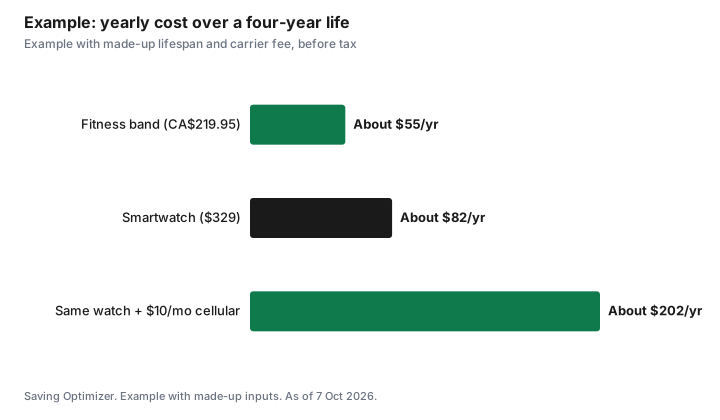
- A fitness band at CA$219.95 works out to about $55 a year over four years, before tax.
- A $329 smartwatch works out to about $82 a year over four years.
- A cellular smartwatch with a made-up $10 monthly carrier fee adds $120 a year, so the watch costs about $82 plus $120, or about $202 a year, before tax.
- Adding a CA$12.99-a-month subscription would add about $156 a year to any device.
In this example, the band does what Jordan needs (steps, sleep and workouts) for the lowest yearly cost, and the cellular watch costs almost four times as much per year.
How to buy for less
- Decide which three features you will use every week.
- Choose a device that matches your phone.
- Skip cellular unless you will leave your phone behind often.
- Look at the previous generation and refurbished models from the maker.
- Buy during a major sale, then use the store's price adjustment policy if the price drops.
- Cancel any subscription trial you do not need before it renews.
Sources
- Apple Canada, Buy Apple Watch SE 3 (from $329; configurations $329, $369, $399 and $439), apple.com/ca, as of 7 Oct 2026.
- Apple Canada, Apple Watch models and compare page (Series 12 from $549; Ultra 4 from $1,099; battery up to 18 to up to 50 hours; wireless service plan required for cellular; Apple Watch For Your Kids on GPS + Cellular models), apple.com/ca, as of 7 Oct 2026.
- Google Store Canada, Fitbit Charge 6 (CA$219.95; 7-day battery life; Android 11 or iOS 16.4 or later; Google Health Premium CA$12.99/month after trial), store.google.com/ca, as of 7 Oct 2026.
- Google Store Canada, Google Pixel Watch 5 (from CA$469.99; Android 12.0 or newer; 4G LTE plan sold separately; some features require Google Health Premium), store.google.com/ca, as of 7 Oct 2026.
- Canadian Society for Exercise Physiology, Canadian 24-Hour Movement Guidelines for Adults aged 18-64 (150 minutes a week; 7 to 9 hours of sleep), csepguidelines.ca, as of 7 Oct 2026.
- Lifespan, carrier fee and usage in the worked example are made up.
Frequently asked questions
How much is a smartwatch in Canada?
On the makers' Canadian stores, Apple Watch SE 3 starts at $329, Google Pixel Watch 5 at CA$469.99, Apple Watch Series 12 at $549 and Apple Watch Ultra 4 at $1,099, as of 7 Oct 2026.
Is a fitness tracker cheaper than a smartwatch?
Usually. The Fitbit Charge 6 is CA$219.95 on the Google Store and Google lists a 7-day battery.
Do I need a phone plan for a smartwatch?
Only for cellular models. Apple and Google both say a wireless plan, sold separately, is required for cellular service.
Can I use an Apple Watch with an Android phone?
No. Apple Watch pairs with an iPhone. Fitbit trackers work with Android 11 or later and iOS 16.4 or later, according to Google.
How long does a smartwatch battery last?
It varies. Apple lists up to 18 to up to 50 hours of normal use across its models. Google lists 7 days for the Fitbit Charge 6.
Is a smartwatch subscription required?
Not for basic features, but some features need one. Google Health Premium renews at CA$12.99 a month after its trial.
Researched and drafted with AI assistance and fact-checked against official Canadian sources. How we create content.
Disclosure: This page contains Amazon.ca affiliate links. As an Amazon Associate, Saving Optimizer earns from qualifying purchases. Education only.