
Internet · Canada
Xplore vs Starlink for Rural Canada: Fibre, Fixed Wireless, and Satellite Trade-Offs
Rural Canadians often treat “Xplore versus Starlink” like a brand vote. It is not. It is a trade-off sheet at one civic address: latency, data priority, weather failure modes, hardware return rules, and whether funded fibre is already in the ditch. This guide is educational — not a paid ranking, not an install design, and not a claim that one logo wins Canada.
Pair it with the map-first rural sequence and the same address worksheet urban shoppers use. If a Connecting Families letter is on the fridge and a participating ISP appears, start there before any retail dish or tower plan.
Disclosure: No Xplore, Starlink, or ISP partnership on this page. Affiliate opportunity types only (ISP plan categories, satellite kit categories). Prices and hardware offers change by postal code — verify live. Education only.
Key takeaways
- Compare failure modes: tower foliage versus sky obstruction and snow on the dish — not marketing download numbers alone.
- Xplore fibre (where glass exists) usually wins latency and symmetrical upload for WFH; fixed wireless is a different product with line-of-sight limits.
- Starlink CAD and hardware are address-specific (Help Center: Order Now). 2026 consumer clusters often show Residential tiers around $75 / $115 / $150 before tax — confirm live.
- Starlink often wins remote-work uploads only when terrestrial paths cannot deliver stable two-way video and VPN.
- Wait for fibre only when the National Broadband Map / UBF layer plus the builder give a dated quarter — not a slogan.
What each option typically delivers (latency, data, weather)
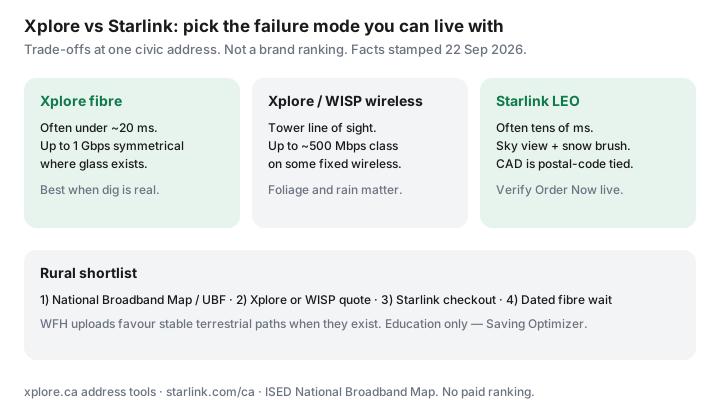
| Path | Latency (typical) | Data / priority notes | Weather / path risk |
|---|---|---|---|
| Xplore fibre (FTTH) | Often under ~20 ms | Retail unlimited claims still need fair-use footnotes; symmetrical uploads common on glass | Plant outages; dig and drop delays |
| Xplore / regional fixed wireless | Higher than fibre; varies by tower load | Some cards market unlimited; evening congestion and priority tiers matter | Foliage, rain fade, tower maintenance |
| Starlink LEO | Often tens of ms (not GEO hundreds) | Residential vs roam vs deprioritized buckets; fair use still applies | Trees, snow on dish, obstruction maps, cell congestion |
| Legacy DSL / GEO sat | DSL: variable; GEO: hundreds of ms | Often the reason households shop LEO | DSL distance; GEO is rarely fine for two-way video |
Cloud backup and two simultaneous video calls care more about upload stability than a 300 Mbps download screenshot. Read the plan’s fair-use language the way you would for any “unlimited” Canadian retail card.
Hardware, install, and monthly cost structure to verify at draft
- Starlink: kit may be a free rental plus shipping, a purchase (consumer write-ups often cluster ~$499–$599), or carry a demand surcharge in busy codes. Return rules matter if fibre is six months out. Taxes extra. Canonical path: starlink.com/ca → address → Order Now (Help Center used with facts stamped 22 Sep 2026).
- Xplore: fibre lookup and address tools on xplore.ca; ask for install fees, modem/ONT rules, and whether a technician visit is required. Fixed-wireless site surveys are not optional theatre — they prevent buying a monthly you cannot deliver.
- 24-month sketch: monthly × 24 + hardware + install − credits. Do not compare a 2018 Xplornet folklore price to a 2026 Starlink checkout screen.
CRTC and ISED materials define underserved around the 50/10 Mbps policy target and map current versus government-supported builds. That is a planning floor, not your Zoom requirement.
When Starlink wins for remote work uploads
Starlink is often the better remote-work path when:
- No fibre drop and no dated UBF build you can bridge.
- Fixed wireless fails the evening test (jitter, packet loss) on a real workday call.
- You need usable two-way video now and can accept LEO jitter versus GEO unusability.
- Hardware is returnable or short-commitment enough that a later fibre cutover is not a sunk-cost trap.
It is still not fibre. Trees on the south/southeast of a Canadian lot, snow load, and deprioritized roam plans can still ruin a Monday standup. If your job is upload-heavy (large VPN file sync, continuous cloud backup), test before you burn the bridge on a DSL contract.
When a terrestrial WISP or Xplore fixed wireless is enough
Prefer terrestrial wireless when a site survey shows clear tower path, evening neighbour tests clear 50/10+ with headroom, and local truck-roll support matters more than a mobile app. Fixed wireless fails differently than Starlink — foliage and rain versus sky obstruction. For light email and one stream, a mid WISP tier can beat LEO monthly CAD. For multi-person WFH, demand written upload numbers, not only download marketing.
Fibre wait decisions
- Open ISED’s National Broadband Map: current services plus UBF-Core / Rapid Response layers.
- Open the builder’s fibre tool (Xplore or regional telco) and ask for a calendar quarter.
- If dated and you can bridge: LTE/WISP or a returnable LEO kit. If vapour: stop waiting as a personality trait.
- Revisit every six months. Builds complete; prices move.
Rural shortlist decision tree
- CFI letter + participating wired ISP → enrol before retail rural stories.
- Xplore (or other) fibre available now → prefer for latency, resale, and upload.
- Dated fibre within a horizon you can live with → bridge; do not identity-buy a dish.
- WISP hits needs with evening proof → compare 24-month CAD and support to Starlink.
- No terrestrial path → Starlink (or another qualifying LEO) with the residential plan the address actually offers.
Re-run the sheet when someone on the sideroad gets glass. A dish is a tool, not a team jersey.
Sources & date stamps
- ISED National Broadband Map and Universal Broadband Fund public materials — current vs government-supported layers; 50/10 underserved framing (facts stamped 22 Sep 2026).
- Starlink Help Center, “How much does Starlink cost?” — address + Order Now is canonical.
- Xplore.ca — fibre and address tools; fibre up to 1 Gbps symmetrical and fixed wireless up to 500 Mbps-class marketing in some areas (verify at address).
- CRTC broadband policy context and Internet Code consumer materials — contracts, notices, complaints path via CCTS when applicable.
- Related Saving Optimizer guide: Starlink vs rural fibre and WISPs.
Frequently asked questions
Is Xplore always better than Starlink?
No. Where Xplore fibre or a solid fixed-wireless path exists, latency and local support often win for daily WFH. Where there is no tower path and no dated fibre, Starlink is often the adult option. Compare the same civic address — do not rank brands in the abstract.
When does Starlink win for remote work uploads?
When terrestrial options cannot deliver stable two-way video and VPN: no fibre, weak DSL, or a WISP that collapses in evening congestion. LEO latency is usually in a usable band versus old GEO satellite, but it still loses to glass. Test a return window if the kit offer allows it.
What should I verify on hardware and monthly cost?
For Starlink, the Help Center is explicit: enter the address and use Order Now — CAD and hardware (rental versus purchase, shipping, demand surcharges) are postal-code specific. For Xplore, use the fibre and address tools on xplore.ca and get install fees in writing. Illustrative 2026 consumer clusters are not quotes.
Should I wait for funded fibre?
Only if ISED’s National Broadband Map (UBF layers) plus the builder’s address tool give you a dated quarter you can live with. A vague “coming soon” is not a plan. Bridge with LTE/WISP or a returnable kit if needed.
Does this page rank Xplore over Starlink for affiliates?
No. There is no paid ranking and no invented partnership. Offer types only (ISP plans, satellite kits as product categories). Education for rural households.