
Technology · Canada
Buying Used Electronics Safely in Canada: Scams, Checks and Payment
In Canada, you can buy used electronics safely by seeing and testing the device before you pay, meeting in a public place, and checking that a phone is not reported lost or stolen. Common scams include asking for a deposit before you see the item, shipping-only sellers, fake payment links, and phones that are activation-locked to someone else's account. For phones, check the IMEI at devicecheck.ca and make sure the seller has signed out of their account before you hand over money.
Key takeaways
- Never send a deposit before seeing the item.
- Meet in a busy public place; many police services offer safe exchange zones.
- Phones: check the IMEI at devicecheck.ca and confirm the device is signed out and reset.
- Test everything: screen, battery, ports, cameras, buttons, charging.
- Pay after inspection. Report fraud to the Canadian Anti-Fraud Centre.
Common scams
| Scam | Warning sign | What to do |
|---|---|---|
| Deposit to hold | Seller wants money before you see it | Do not pay until you inspect |
| Shipping only | Seller cannot meet and asks for e-transfer first | Buy locally or through a platform with buyer protection |
| Fake payment or verification link | Link or code requests by text or email | Never click or share codes |
| Activation-locked device | Seller cannot sign out or reset | Walk away |
| Stolen or blacklisted phone | IMEI reported lost or stolen | Check devicecheck.ca before paying |
Device checklist
- Phone: IMEI check at devicecheck.ca; signed out of the seller's account; factory reset in front of you; battery health; unlocked.
- Laptop: boots normally; battery holds charge; keyboard, trackpad, ports and webcam work; no firmware password.
- Console or tablet: account signed out; controllers work; no bans or locks.
- Bring a charger, cable and a SIM card or earbuds to test.
Paying safely
Pay only after inspecting the device. Cash or a payment you send in person once satisfied are common for local deals. An Interac e-Transfer is hard to reverse once accepted, so do not send one before seeing the item. If something goes wrong, report it to the platform, local police and the Canadian Anti-Fraud Centre.
Step by step: a safe local purchase
- Research the fair price by looking at recent listings for the same model and condition, and the refurbished price.
- Message through the platform. Ask for the model, storage, battery health, purchase date, and whether a receipt or original box is available.
- For phones, ask for the IMEI and check it at devicecheck.ca before meeting.
- Agree to meet in a busy public place or a police safe exchange zone, in daylight, and bring someone if you can.
- Inspect and test using the checklist. Take your time.
- Watch the seller sign out of their account and reset the device, or confirm it shows the setup screen with no lock.
- Pay only when satisfied, and get a simple written receipt with the model, serial or IMEI, price, date and the seller's name.
What protection you have
Private sales between individuals generally fall outside the consumer protection laws that cover buying from a business, so you have far fewer rights if something goes wrong. Buying from a retailer, a refurbisher or a platform with buyer protection gives you a return window or warranty. Paying with a credit card through a business may let you dispute a charge; cash and e-Transfers to individuals usually cannot be reversed.
| Where | Typical protection | Trade-off |
|---|---|---|
| Private seller | Little beyond what you inspect | Lowest price |
| Platform with buyer protection | Platform's dispute process | Fees or shipping |
| Refurbisher or retailer | Warranty and return window | Higher price |
| Pawnshop or second-hand dealer | Store policy; some provinces regulate these dealers | Check policy and condition |
Red flags in a listing
- A price far below similar listings.
- A seller who will not meet or video-call, or who is "out of town".
- Requests to move the conversation off the platform quickly.
- Stock photos instead of photos of the actual item.
- Pressure to decide fast because "others are interested".
Example with made-up inputs: what a safe deal looks like
These numbers are an example with made-up inputs. A used laptop is listed at $400. Refurbished, the same model costs $520 with a one-year warranty. The buyer meets at a police safe exchange zone, tests the laptop for 15 minutes, watches the seller sign out and reset it, and pays $380 in cash after noting a worn battery. The $140 saving over refurbished is the price of having no warranty.
If anything feels wrong at the meeting, such as a changed price, a different device than the one listed, or pressure to pay before testing, walk away. Another listing will come along.
Common mistakes
- Paying a deposit to hold an item.
- Testing only that a phone turns on, not calls, cameras, charging and buttons.
- Accepting a device still signed in to someone else's account.
- Skipping the IMEI check because the seller seems trustworthy.
- Meeting at home with a stranger.
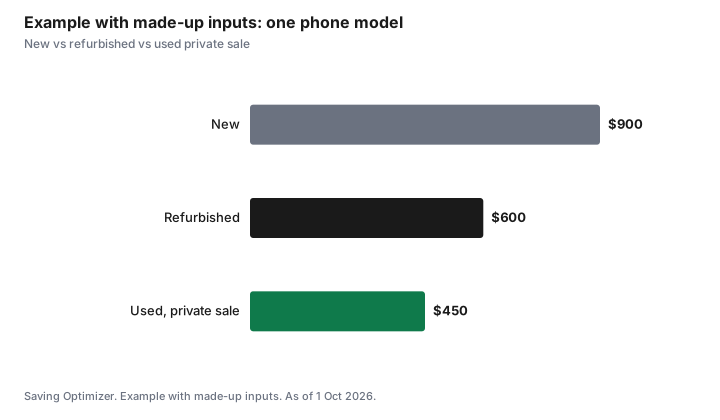
Example with made-up inputs: used vs refurbished
These numbers are an example with made-up inputs, not current prices.
| Option | Price | Warranty |
|---|---|---|
| New | $900 | Manufacturer |
| Refurbished | $600 | Seller or refurbisher |
| Used, private sale | $450 | None |
Sources
- Canadian Wireless Telecommunications Association, devicecheck.ca, as of 1 Oct 2026. Check if a device has been reported lost or stolen.
- Canadian Anti-Fraud Centre, reporting fraud, as of 1 Oct 2026. 1-888-495-8501.
- The prices in the example table and chart are made-up inputs.
Frequently asked questions
How do I check if a used phone is stolen in Canada?
Enter the phone's IMEI at devicecheck.ca, which checks phones reported lost or stolen with participating Canadian carriers.
Is it safe to send an e-Transfer to a seller?
Not before you have seen and tested the item. Transfers are hard to reverse once accepted.
What is an activation lock?
A security feature that ties a device to the owner's account. If the seller cannot sign out, the device may be unusable. Walk away.
Where should I meet a seller?
In a busy public place. Many police services offer safe exchange zones.
Where do I report a marketplace scam?
To the platform, local police and the Canadian Anti-Fraud Centre at 1-888-495-8501.
Do consumer protection laws cover private sales?
Private sales between individuals generally fall outside the consumer protection laws that cover businesses, so inspect carefully. Retailers, refurbishers and platforms with buyer protection give more recourse.
Should I get a receipt from a private seller?
Yes. A simple receipt with the model, serial number or IMEI, price, date and the seller's name helps if a problem comes up later.
Is buying used cheaper than refurbished?
Usually, but refurbished items often carry a warranty and return window. The price gap is what you pay for that protection.
What should I test on a used laptop?
That it boots normally, the battery holds a charge, the keyboard, trackpad, ports, speakers and webcam work, and there is no firmware or account lock.
Can I return a used item bought privately?
Usually not, unless the seller agrees. That is why inspection before payment matters.
Researched and drafted with AI assistance and fact-checked against official Canadian sources. How we create content.
Disclosure: Marketplaces are described as offer types; none is named or ranked. devicecheck.ca and the Canadian Anti-Fraud Centre are named as public resources, not partners. Saving Optimizer may earn a commission if a partner link is added later; no partnership is claimed. Education only.