
Housing · Canada
How to build a Canadian rental application package landlords actually read
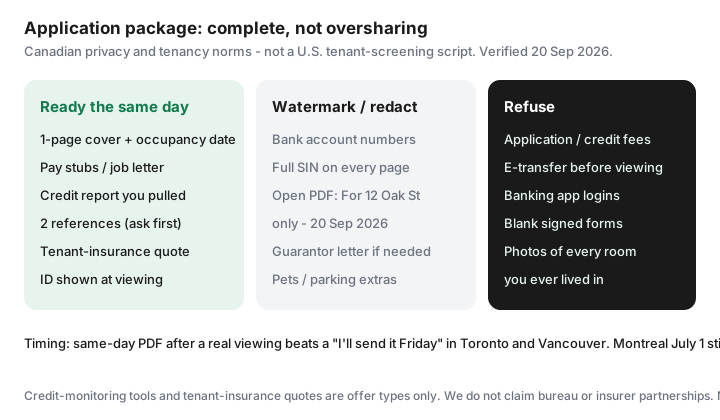
Strong applicants lose units because the package is a blurry pay stub in iMessage, a SIN on every page, or a “I’ll send it tomorrow” after a 6 p.m. Toronto viewing. Canadian landlords want to know you can pay and will not wreck the suite. They do not need your banking login. Application fees are a refuse in B.C. and a red flag in Ontario and Québec — compete with documents, not cash.
This is a privacy-aware package for Canadian credit-check culture. It is not a U.S. tenant-screening script and not a promise you will beat 40 other applicants on a $2,100 one-bed.
Disclosure: Credit-monitoring tools and tenant-insurance quote comparison tools are offer types. Saving Optimizer may earn a commission if we later add partner links. We do not currently claim bureau, insurer, or landlord-software partnerships. This is not legal, credit, or insurance advice.
Key takeaways
- Same-day PDF after a real viewing beats a prettier package on Friday.
- Pull your own Equifax or TransUnion disclosure, watermark it, and bring ID to the showing. Do not email a SIN “just in case.”
- Income, job letter, and two references you have already asked. Guarantors are common for students — get the letter before the hunt.
- Application, holding, and credit-check fees are a skip. See provincial deposit rules for the lawful cheque.
- Tenant insurance is often requested. Shop coverage, not a brand. We do not claim insurer partnerships.
What most Canadian landlords ask for (and what they cannot demand)
Typical lawful-feeling ask: full name, current address, occupancy date, income proof, employer, previous landlord contact, consent to a credit check, pets, occupants, and sometimes a tenant-insurance binder. Human-rights rules still apply — family status, race, and other protected grounds are not “preferences.”
They should not need: your SIN on a form you have not decided to sign, open banking credentials, photos of every room you have ever rented, or a fee to look at the application. B.C. RTB: no fee for accepting or processing an application. Ontario’s rental-offences material flags extra fees. Québec bars extra amounts besides rent. A complete package is how you say no to the fee without looking empty-handed.
Credit report options: Equifax/TransUnion and how to present scores
Canada’s two big consumer bureaus are Equifax and TransUnion. A landlord may run their own check with your consent, or they may accept a recent report you pulled. Pulling your own disclosure lets you fix errors before the weekend viewing and watermark the PDF with the address and date so it is less useful to the next scammer. Paid “score booster” subscriptions are optional offer types — a free or low-cost statutory disclosure is enough for most hunts. Do not screenshot a credit-card app score and call it a bureau report.
A thin file (newcomers, students) needs a guarantor or a larger income letter, not a fake score. Say that on the cover page.
Employment, income, and guarantor letters that reduce friction
Best stack: last two pay stubs, a one-paragraph employer letter (role, start date, permanent vs contract, hours), and a cover line with gross monthly income. Self-employed: T4A/T2125-era summaries or a letter from the accountant, plus three months of deposits with account numbers redacted. Students: enrolment letter plus guarantor. Guarantor letter: name, relationship, address, income proof, and that they understand they may be asked to sign. Ask them before you book six viewings.
References and previous-landlord contact etiquette
Two humans who will answer the phone: a prior landlord or superintendent, and a manager. Text them the same morning: “A landlord may call about 12 Oak Street. You can say I paid on time and left the place clean.” Do not list a friend as “landlord.” Do not list a landlord you are in an active LTB/RTB/TAL fight with unless you have a sentence ready. Current landlord: some renters use a workplace reference first if they have not given notice — that is a judgment call, not a rule.
Privacy: what to share, what to watermark, what to refuse
- Watermark every PDF: “For 12 Oak St only · [date] · not for reuse.”
- Redact account numbers; leave enough that the income is obvious.
- Show government ID at the viewing; do not email both sides of a citizenship card to a Kijiji account created yesterday.
- SIN: not a cover-letter decoration. If a legitimate screening form later needs it, you can decide then.
- Refuse: application fees, holding e-transfers before a lawful lease path, lockbox codes from overseas “owners,” and blank signed agreements. Hunt using the scam filters.
Application timing: same-day vs next-morning follow-up
In Toronto, Vancouver, and central Montréal, real units priced near the market often go in hours. Stand in the unit, confirm who holds the keys, then send the PDF from the hallway. Subject line: “[Address] application — [your names] — [move-in date] — income $X.” Follow up once the next morning if they asked for a showing-only list. Ghosts get one bump, then archive. A tracking sheet lives in the hunting guide.
Template checklist for Toronto, Vancouver, and Montréal applicants
| City | Package note |
|---|---|
| Toronto | Expect “first and last” language — last-month rent is the usual lawful deposit, not a damage hold. Hydro and AC in writing. Rooms vs whole apartments. |
| Vancouver / Victoria | Half-month security cap; pet deposit rules. Moisture and egress on basement suites. No application fee. Compass/parking honesty. |
| Montréal | French cover paragraph helps. No exacted damage deposit (C.c.Q. 1904). July 1 cluster: package ready in June. TAL assignment culture if you might leave. |
| All three | Tenant-insurance quote in the PDF. Shop coverage. We do not rank insurers. |
Once you have keys, keep the unit with a comps-based renewal instead of rebuilding this PDF every June.
Sources & date stamps
- Tribunals Ontario / LTB public pages — tenancy and extra-fee themes (high-level; used 20 Sep 2026).
- Government of B.C., Residential tenancies; deposits and fees — no application fee; deposit caps.
- TAL and Civil Code of Québec art. 1904 — no exacted deposits or extra amounts as a condition of the lease.
- Community demand: r/PersonalFinanceCanada and city subs — incomplete packages and oversharing are a recurring pattern, not a search-volume statistic.
Frequently asked questions
What should be in a Canadian rental application package?
A one-page cover with occupancy date and income, pay stubs or a job letter, a credit report you control, two references who will answer, and (often) a tenant-insurance quote. Watermark PDFs. Show ID at the viewing. Do not lead with a SIN or an application fee.
Can a landlord charge me to apply or run a credit check?
Treat fees as a red flag. B.C. says landlords cannot charge to accept or process an application. Ontario and Québec extra-fee rules point the same direction. Offer a complete package instead of cash.
Should I send my Social Insurance Number?
Not as a default attachment. A legitimate screening step after you have chosen each other is a different conversation. Emailing a SIN to a new Marketplace account is how people get a second problem.
How fast do I need to apply in Toronto or Vancouver?
Same day after a real viewing if the unit is in your price band. Next-morning is already late on many listings. Montréal’s July 1 wave rewards a package that is ready in June.
Do you sell credit monitoring or tenant insurance?
No. Those are offer types some households use. We do not claim bureau or insurer partnerships. Shop coverage, not a brand.