
Housing · Canada
Heat included vs paying hydro: how to compare Canadian lease listings fairly
Renters sort Kijiji by sticker rent and then discover January’s electric baseboard bill. “Heat included” and “hydro extra” are not synonyms, and hydro in Canadian listings usually means electricity — which is the heat, if the heat is electric. Comparing $2,150 plus mystery kWh to $2,400 heat-included is how a “deal” loses.
This is a Housing lease worksheet. Plan choice, time-of-use, and furnace upgrades live in cut home energy costs. We are not quoting your utility.
Disclosure: There is no natural affiliate product in a lease-inclusion worksheet. Saving Optimizer does not claim utility, landlord, or thermostat-brand partnerships. For rate plans and air sealing, see the Utilities guides. This is not legal or energy-contract advice.
Key takeaways
- Decode every listing: heat, hydro (electricity), water, gas, internet. “All-in” that omits electric heat is not all-in.
- Electric baseboard in a leaky unit can erase a $200–$300 sticker discount in a cold month. Forced-air gas and Hydro-Québec files look different.
- Ask for last winter’s bills or a written monthly cap before you sign. Labelled estimates are not quotes.
- Submetered houses and “we split hydro however” basements are red flags. Get the meter story in the lease.
- You can ask for heat included or a cap. Included rent is still rent — B.C. and Ontario increase rules do not vanish because the boiler got expensive.
Decode listing language: heat, hydro, water, gas, internet
Write five columns on the viewing notes:
- Heat — furnace, boiler, electric baseboard, heat pump, or “space heaters in the closet.” Who pays the fuel?
- Hydro — electricity. Lights and laundry are small; electric heat is not.
- Water / hot water — sometimes on gas, sometimes on hydro, sometimes included.
- Gas — cooking vs heat. A gas stove and electric heat is a worst-of-both listing.
- Internet — bundled, capped, or “you set it up.” Not heat, still a stack line.
Ontario and B.C. included-rent rules still treat heat that is part of rent as rent. A landlord cannot usually reprice “heat” as a new fee because the utility bill went up — see Ontario rent-increase pages and the B.C. 2.3% limit. That is why “heat included” has value beyond comfort.
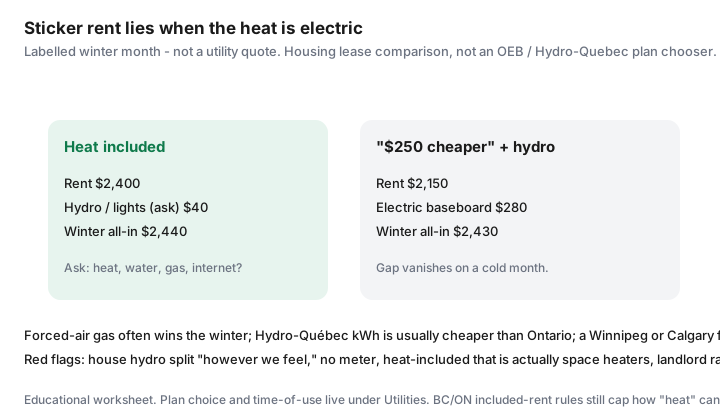
Electric baseboard vs forced-air cost patterns by province
Patterns, not your bill:
- Electric baseboard in older Toronto, Halifax, or Vancouver walk-ups: winter months can dwarf summer. A $200–$400 January is a community-forum cliché — treat it as a reason to demand bills, not as your number.
- Forced-air gas in Ontario, Alberta, and many Prairies houses: heat is often cheaper per degree than resistance electric, but you now have a gas account and a furnace filter.
- Hydro-Québec territory: kWh is typically cheaper than Ontario, so the same baseboard can be less brutal — still ask for bills, especially in poorly insulated plexes.
- Heat pumps in Maritime and B.C. listings: efficient until someone used them as air conditioners with the windows open. Ask what the backup heat is.
StatsCan’s August 2026 CPI Daily (14 Sep 2026) is national inflation mood music. It is not your suite’s kWh.
How to estimate winter bills before you sign
Ask: last January and February bills for this unit, or the same-line unit next door; whether the account is in the tenant’s name; whether there is a smart meter or a split. If they cannot produce a number, assume the worst month in your climate and put it on the worksheet. A $40 “hydro” line item copied from a downtown high-rise with central heat will lie about a converted house.
When “all-in” rent still loses to a cheaper + utilities unit
All-in loses when the premium is larger than a realistic winter average plus the summer months when hydro is lights and a fridge. Worked sketch: heat-included $2,550 vs $2,200 + $80 average hydro + $40 winter/summer blended extra. If your honest annual hydro average is $90 / month, the cheaper unit wins by ~$260 / month. If your honest winter is $300 and you are staying three winters, do the annual math, not the January panic or the July denial.
Submetering and split-bill red flags in houses and basements
- One hydro account for three suites and a “we’ll figure it out.”
- The upstairs dryer is on your meter. Ask what is wired where.
- Landlord keeps the account and bills you a round number that never comes with a scan of the bill.
- Heat “included” that is two plug-in heaters and a note not to use them.
Get the arrangement into the lease. Handshake splits die in February.
Negotiation: ask for heat included or a utility cap
I can do $X if heat is included, or $Y with a written winter hydro cap of $Z — unused cap stays with me, overage we split with bills attached. They will sometimes prefer a slightly higher included rent (predictable, and increase-controlled) to a fight every January. You can also walk. A complete application package makes the ask look serious.
Worksheet for apples-to-apples rent comparisons
| Line | Unit A (included) | Unit B (plus hydro) |
|---|---|---|
| Sticker rent | ||
| Heat (who pays / fuel) | ||
| Jan–Feb hydro or gas (bills) | ||
| Shoulder-season average | ||
| Water / internet | ||
| Winter all-in | ||
| Annual all-in ÷ 12 |
Sort the hunting spreadsheet by winter all-in, not by Kijiji rent. Then check deposits so you are not also overpaying the move-in cheque.
Sources & date stamps
- Ontario.ca, Residential rent increases — guideline units and the idea that included costs do not invent a second increase path (page used 20 Sep 2026; 2026 guideline 2.1%).
- Government of B.C., Rent increases — included utilities cannot push rent past the 2026 2.3% limit; fees need agreement (updated 27 Aug 2026).
- Statistics Canada, The Daily, 14 Sep 2026 — August 2026 CPI context (rent +2.8% YoY); not your kWh.
- Community patterns: r/askTO and city subs — electric-heat January surprises; directional, not a volume statistic.
Frequently asked questions
What does “hydro extra” mean on a Canadian listing?
Hydro usually means electricity. If the suite uses electric baseboards, hydro extra means you are buying the heat. Lights-only hydro in a gas-heated building is a different, smaller number. Ask which fuel heats the rooms.
Is heat-included always a better deal?
No. A high included rent can lose to a cheaper unit with modest gas heat and documented bills. Compare winter all-in and an annual average, not the sticker and not January alone.
Can a landlord raise my “utility share” mid-lease?
If heat or utilities are included as rent, provincial increase rules still apply — B.C.’s 2.3% limit and Ontario’s guideline (where it applies) do not vanish because Enbridge had a cold month. Separate written utility agreements are a read-twice item. This is not a ruling on your lease.
How do I estimate bills before I sign?
Ask for last January and February bills for that unit, confirm what is on the meter, and write a cap if they cannot produce history. Forum numbers are not your suite.
Is this a utilities or rate-plan guide?
No. It is a lease-inclusion comparison. Rate plans, air sealing, and thermostats are in the Utilities category.