
Events · Canada
Hosting Holiday Houseguests: Food, Utilities and Fair Splits
Hosting holiday houseguests costs more than most hosts plan for, because the spending is spread across groceries, extra heating and hot water, laundry, toiletries, outings and the odd takeout night. The easiest way to plan is to count guest-days (guests multiplied by nights), plan meals on a simple grid for each day of the stay, and agree before anyone arrives who pays for what. A common fair split is that the host covers meals at home and guests cover outings, one dinner, or a share of groceries. Saying this plainly in advance is kinder than hoping someone offers.
Key takeaways
- Count guest-days: guests × nights. Food and supplies scale with it.
- Plan meals on a day-by-day grid. Most overspending is unplanned takeout and repeat grocery runs.
- Utilities rise a little with more people: hot water, laundry, cooking and heat if the house is kept warmer.
- Agree who pays for outings, restaurants and tickets before the visit.
- A grocery kitty or a guests-cook-one-night rule spreads costs without awkwardness.
- Example with made-up inputs: four guests for four nights costs the hosts $640, or $360 after a fair split.
Food for multi-day stays
Food is the largest cost of a multi-day visit. Start by counting meals: breakfasts, lunches, dinners and snacks, for each day guests are in the house. Some meals will be out, some will be at another relative's home, and some will be the main holiday dinner. A grid makes the plan visible and stops the repeat runs to the store.
| Day | Breakfast | Lunch | Dinner | Notes |
|---|---|---|---|---|
| Arrival day | — | Simple dinner, can be made ahead | ||
| Day 2 | ||||
| Holiday day | Main dinner | See the Christmas dinner budget | ||
| Day 4 | Guests cook or treat | |||
| Departure day | — | — | Packed snacks for the road |
- Plan one big shop before guests arrive and one top-up mid-visit.
- Use make-ahead dishes for arrival day, when everyone is tired.
- Plan leftovers on purpose: the day after a big dinner is an easy lunch.
- Ask about allergies and dietary needs in advance so you do not buy twice.
- Keep easy breakfast foods that people can serve themselves.
For the main meal itself, the Christmas dinner budget has a per-guest worksheet.
Utility and supply costs
Extra people in the house use more hot water for showers, run more laundry and dishwasher loads, and cook more. If guests are used to a warmer house, you may raise the thermostat. Each of these is small, but over a week they add up, especially in a house with electric heat or a tank water heater. You do not need to measure them exactly; it is enough to know they are there when deciding whether to ask for a contribution.
| Item | Check | Have enough? |
|---|---|---|
| Toilet paper, tissues, paper towel | Count rolls | |
| Soap, shampoo, toothpaste | Spare travel sizes | |
| Towels and bedding | One set per guest plus a spare | |
| Laundry and dish detergent | Enough for extra loads | |
| Coffee, tea, milk | Daily use × guests | |
| Garbage bags | More waste than usual |
Who pays for outings
Outings are where costs become uneven and uncomfortable. If you take guests to a show, a light display, a market or a restaurant, decide in advance whether each household pays for itself, the host treats once and guests treat once, or the costs go into a shared kitty. Free and cheap options help: many cities have free light displays and markets with free admission days; see Christmas light shows and Christmas markets.
Sleeping arrangements
If you do not have a guest room, compare options honestly. An air mattress or a sofa bed costs little. Borrowing bedding from a friend is free. If the house is truly full, a nearby hotel or short-term rental for some guests can make a visit more pleasant for everyone, and guests often expect to pay for their own accommodation. Raise it early, when booking is still easy.
Splitting fairly
Fair does not have to mean equal. A host who is not paying for travel may be happy to cover meals at home. Guests who spent a lot on flights may contribute in other ways. The point is to agree on something, so no one feels taken for granted.
| Split | How it works | Suits |
|---|---|---|
| Host covers home meals; guests cover outings | Simple and common | Guests who travelled far |
| Guests cook or buy one dinner | Each visiting household takes one night | Longer stays, family who like to cook |
| Grocery kitty | Everyone puts money in a jar or app at the start | Several households, a week or more |
| Guests bring set items | Wine, breakfast foods, dessert | Short visits |
| Each pays their own share | Costs split by adults | Groups of friends |
What to say
A short message before the visit sets expectations without awkwardness: "We're so glad you're coming. We'll take care of meals at home. Would you be up for treating us all to dinner one night and covering your own tickets for the light show?" Most guests are relieved to know what helps.
Guests with children, pets or special needs
Children add snacks, activities and sometimes a cot or a high chair; ask families to bring what they can, or borrow from a neighbour rather than buying for one visit. Pets add food, cleaning and the question of whether your home suits them; agree in advance whether a pet is coming at all. Older relatives may need a bedroom on the main floor, a night light or a quieter schedule. None of these is costly if planned, and all of them are expensive if solved at the last minute.
Food safety with a full house
More people means more food sitting out. Health Canada advises throwing away cooked food left at room temperature for more than two hours, keeping food out of the danger zone between 4°C and 60°C, and eating refrigerated leftovers within two to three days or freezing them. A full fridge cools less well, so clear space before the big shop and use a cooler with ice for drinks.
Example with made-up inputs: four guests, four nights
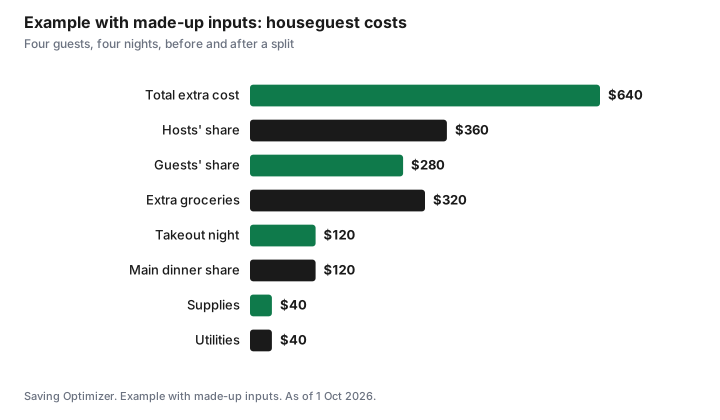
These numbers are an example with made-up inputs. They are not real prices. A couple hosts the husband's parents and his sister's family, four guests in all, for four nights over the holidays. That is 16 guest-nights. The hosts estimate extra groceries of $320, the main dinner's extra share $120, supplies $40, extra utilities $40 and one takeout night $120. The total extra cost to the hosts is $640.
They agree that the sister's family buys groceries for one dinner and cooks ($120), the parents pay for the takeout night ($120), and guests bring breakfast foods ($40). The hosts' share falls to $360.
| Item | Total | Paid by guests | Paid by hosts |
|---|---|---|---|
| Extra groceries | $320 | $160 (one dinner and breakfast foods) | $160 |
| Main dinner, extra share | $120 | — | $120 |
| Supplies | $40 | — | $40 |
| Extra utilities | $40 | — | $40 |
| Takeout night | $120 | $120 | — |
| Total | $640 | $280 | $360 |
Plan
- Confirm dates, number of guests and sleeping arrangements early.
- Write the meal grid and agree who cooks or treats which nights.
- Agree the split for groceries and outings in a short message.
- Do one big shop and stock supplies before arrival.
- Plan free or cheap outings and one treat.
- After the visit, note what to change next time.
Hosting fits inside the month's spending. The December spending plan puts hosting beside gifts and travel.
Sources
- Health Canada, Food safety tips for leftovers, canada.ca (archived copy captured 25 Aug 2026), as of 1 Oct 2026. Two-hour rule; danger zone 4°C to 60°C; eat refrigerated leftovers within 2 to 3 days.
- The meal grid, split options and message are planning tools written for this guide.
- The guests, nights, costs, splits, table and chart in the example are an example with made-up inputs.
Frequently asked questions
How much does it cost to host houseguests for the holidays?
It depends on the number of guests and nights. Count guest-nights, plan meals on a day-by-day grid, and add supplies, a little extra for utilities and any takeout or outings. In a made-up example, four guests for four nights cost the hosts $640 before a split.
Should houseguests pay for anything?
Many hosts cover meals at home and ask guests to treat one dinner, cook one night, bring set items or pay for their own outings. Agree on it before the visit.
How do I ask guests to contribute without being awkward?
Send a short, warm message before the visit saying what you will cover and suggesting one specific thing they could cover, such as one dinner or their own tickets.
How long can holiday leftovers stay in the fridge?
Health Canada says to eat refrigerated leftovers within two to three days or freeze them, and to throw away cooked food left at room temperature for more than two hours.
Is it rude to suggest guests stay in a hotel?
Not if the house is truly full. Raise it early and frame it around everyone's comfort. Guests often expect to pay for their own accommodation.
Researched and drafted with AI assistance and fact-checked against official Canadian sources. How we create content.
Disclosure: Saving Optimizer may earn a commission if a partner link is added later, such as a grocery, travel or cash-back offer type. No partnership is claimed on this page. Education only.