
Events · Canada
Diwali on a Budget in Canada: Sweets, Gifts, Decor and Hosting
A Diwali budget works best as one festival total, decided before the shopping starts, then split across five lines: sweets, gifts, lights and decor, clothes, and hosting. Most of the overspending happens in the last week, when boxes of mithai, new outfits and extra guests are added one at a time. Set the total, decide which items you will make and which you will buy, reuse the decor you already own, and keep a short list of the people you exchange gifts with. In 2026, the BAPS festival calendar lists Diwali on Sunday 8 November, with Annakut and the Hindu New Year on 10 November. Dates can differ by tradition and region, so confirm with your own temple or family.
Key takeaways
- Pick one festival total first, then split it across sweets, gifts, decor, clothes and hosting.
- Sweets: compare cost per box for homemade and bought, and buy only for the visits you will make.
- Gifts: agree a cap with close family, and give sweets or a household gift to a wider circle.
- Decor: reuse diyas, LED lights and rangoli supplies; buy replacements after the festival if a store discounts them.
- Fireworks: in Toronto, Diwali is not a permit-free day. Check your city's rules before buying.
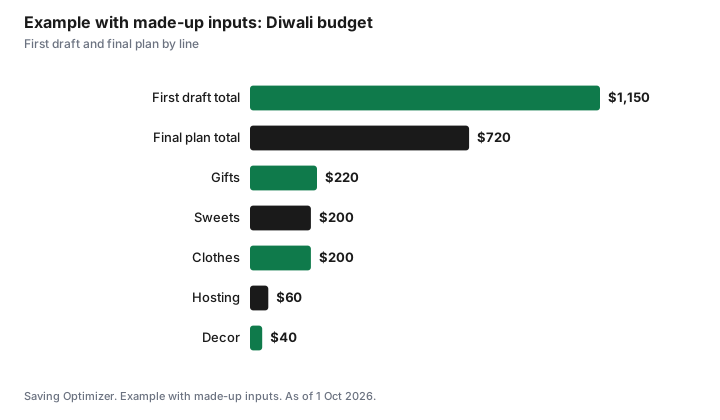
- Example with made-up inputs: a $1,150 first draft becomes $720 with a gift cap and reused decor.
Setting a festival budget
Diwali spending spreads across many small purchases over several days, which makes it easy to lose track. Write one total for the festival, out of money you have, and then divide it. If you also celebrate other holidays in November and December, set the Diwali total alongside them so one festival does not use money set aside for another. The December spending plan uses the same method for the rest of the season.
| Line | What it covers | Your amount |
|---|---|---|
| Sweets and snacks | Mithai boxes, dry fruit, ingredients for homemade sweets | |
| Gifts | Family gifts, gifts for hosts, gifts for children | |
| Lights and decor | Diyas, candles, LED strings, rangoli colours, flowers | |
| Clothes | New outfits or tailoring, if part of your tradition | |
| Hosting | Meals for guests, puja items, disposable or rented serveware | |
| Buffer | Last-minute visits and forgotten items |
Ask the household which line matters most this year. For some families it is new clothes for the children; for others it is a large dinner. Put more into that line and trim the rest, instead of cutting every line a little.
Sweets: homemade versus bought
Sweets are often the biggest line, because boxes go to many households. Count the visits first: how many households will you visit or host, and how many boxes does each need? Then compare homemade and bought on cost per box, including your time.
| Item | Bought | Homemade |
|---|---|---|
| Cost per box | Price on the shop's menu | Ingredients divided by boxes made |
| Time | Pickup or delivery | Hours of cooking |
| Shelf life | Ask the shop | Depends on the recipe |
| Boxes needed | Number of visits | |
| Total |
Many households do both: make one or two sweets that keep well, and buy a smaller number of boxes from a favourite shop for close family. Order early if your shop takes pre-orders, because the last days before Diwali are the busiest. If you host, keep food safety in mind: Health Canada says to throw away cooked food left at room temperature for more than two hours and to keep food out of the danger zone between 4°C and 60°C. That applies to milk-based sweets and savoury snacks set out for guests.
Gifts and gift exchanges
Gift lists grow quickly when every visit comes with a present. A simple structure helps:
- Close family: individual gifts with an agreed cap.
- Wider family and friends: a box of sweets or dry fruit, the same for everyone.
- Hosts: a small household item or flowers.
- Children: small gifts or money in an envelope, with an amount agreed between parents so cousins are treated alike.
- Coworkers and neighbours: a shared box of sweets.
Agree the cap with siblings early in October, before anyone buys. A gift card can be a good choice for older relatives or young adults; most provinces ban expiry dates on ordinary retail gift cards, as explained in gift card rules by province.
Lights and decor you can reuse
Decor is where a one-time purchase can last for years. Clay or brass diyas, LED light strings, torans and rangoli stencils can all be stored and used again. Before buying, take everything out of storage, test the lights and count what you have. Buy only to fill gaps.
| Item | Have | Working? | Need |
|---|---|---|---|
| Diyas | |||
| Candles or tealights | |||
| LED light strings | |||
| Toran or door hanging | |||
| Rangoli colours and stencils | |||
| Lanterns |
Store decor in labelled boxes with lights wrapped around a piece of cardboard so they do not tangle. Keep open flames away from curtains and out of reach of children and pets, and never leave diyas or candles burning unattended. Many households use LED diyas indoors and real diyas only at the door or on a protected surface.
Fireworks: check your city first
Fireworks rules are set by each municipality. In Toronto, setting off fireworks on your own property is allowed until 11 p.m. with a permit, and Victoria Day and Canada Day are the only days that do not need one. That means Diwali fireworks in Toronto need a permit. The City lists the 2026 permit fee as $226.37 and asks residents to apply at least 10 business days ahead. Toronto does not allow fireworks in parks, on beaches, streets, parking lots or balconies, or on private property that is not your own. Other cities have their own rules, and some restrict or ban consumer fireworks, so check your city's page. A community celebration with a permitted display is often the cheaper and safer option.
Hosting family and friends
Hosting is the line most likely to grow. Decide early how many people you will host and on which day. A potluck, where each household brings one dish, cuts the cost and the cooking. If you host a puja, list the items you need and check what you already have. Rent or borrow large serving dishes instead of buying them for one evening.
- Set the guest count before you shop.
- Plan one main meal and snacks, not several full meals.
- Ask guests to bring a dish or sweets instead of a gift.
- Cook dishes that can be made a day ahead.
- Refrigerate leftovers within two hours, as Health Canada advises.
For a larger gathering, the holiday party hosting budget has a per-guest worksheet you can adapt.
Example with made-up inputs: a family's Diwali plan
These numbers are an example with made-up inputs. They are not shop prices. A family's first draft adds up to $1,150: sweets $300, gifts $400, decor $150, clothes $200 and hosting $100. They agree a $40 gift cap with siblings and give sweet boxes to the wider circle, which brings gifts to $220. They make two kinds of sweets at home and buy fewer boxes, bringing sweets to $200. They reuse last year's lights and diyas and buy only candles, bringing decor to $40. Clothes stay at $200 for the children. Hosting becomes a potluck at $60. The new total is $720.
| Line | First draft | Final plan |
|---|---|---|
| Sweets | $300 | $200 |
| Gifts | $400 | $220 |
| Decor | $150 | $40 |
| Clothes | $200 | $200 |
| Hosting | $100 | $60 |
| Total | $1,150 | $720 |
A Diwali plan, step by step
- Early October: set the festival total and agree gift caps with family.
- Mid-October: take out decor, test lights, and list what you need.
- Three weeks before: order sweets or plan homemade sweets; order or tailor clothes.
- Two weeks before: confirm who you will visit and who will visit you; plan the potluck.
- If you plan fireworks, check your city's rules and apply for any permit well ahead.
- After the festival: pack decor carefully and note what to replace next year.
Sources
- BAPS Swaminarayan Sanstha, Festival List 2026, baps.org, as of 1 Oct 2026. Diwali listed on 8 November 2026; Annakut and Hindu New Year on 10 November 2026.
- City of Toronto, Fireworks, toronto.ca, as of 1 Oct 2026. Permit required except Victoria Day and Canada Day; until 11 p.m.; 2026 permit fee $226.37; apply at least 10 business days ahead; places where fireworks are not allowed.
- Health Canada, Food safety tips for leftovers, canada.ca (archived copy captured 25 Aug 2026), as of 1 Oct 2026. Danger zone 4°C to 60°C; discard cooked food left out more than two hours.
- The budget lines, amounts, table and chart in the example are an example with made-up inputs.
Frequently asked questions
When is Diwali in 2026?
The BAPS 2026 festival calendar lists Diwali on Sunday 8 November 2026, with Annakut and the Hindu New Year on 10 November. Dates can differ by tradition and region, so confirm with your temple or family.
How much should a family spend on Diwali?
There is no set amount. Choose one festival total from money you have, then split it across sweets, gifts, decor, clothes and hosting, putting more into the line your family cares about most.
Is it cheaper to make Diwali sweets at home?
It depends on the sweet, your ingredients and your time. Count the boxes you need, then compare the shop's price per box with your ingredient cost divided by the boxes one recipe makes.
Can I set off fireworks for Diwali in Toronto?
Only with a permit. Toronto allows fireworks on your own property until 11 p.m. with a permit, and only Victoria Day and Canada Day are permit-free. The City lists the 2026 permit at $226.37 and asks for applications at least 10 business days ahead.
How do I save on Diwali decorations?
Take out and test what you already own, buy only what is missing, choose reusable items such as LED strings and clay or brass diyas, and store them carefully after the festival.
Researched and drafted with AI assistance and fact-checked against official Canadian sources. How we create content.
Disclosure: Saving Optimizer may earn a commission if a partner link is added later, such as a grocery, cash-back or gift card offer type. No partnership is claimed on this page, and no shop or brand is ranked. Education only.