
Housing · Canada
Co-living vs studio apartments in Canadian cities: a real cost comparison
Newcomers compare a co-living Instagram price to a bare studio rent and call the house a steal. The studio listing is often unfurnished, hydro-extra, and missing internet. The co-living number is often furnished, Wi-Fi included, and wrapped in house rules that fine you for a cousin on the sofa. Expensive Canadian cities punish that mismatch.
Date-stamped studio-side numbers: Toronto Regional Real Estate Board Q2 2026 condo rental averages — bachelor $1,849, one-bedroom $2,273 (condo market report). Statistics Canada’s Quarterly Rent Statistics for Q2 2026 (Daily, 9 Sep 2026) do not print a studio CMA average in The Daily; they do print asking two-beds of $2,650 Toronto and $3,030 Vancouver. Use TRREB for Toronto bachelors; treat Vancouver studio figures below as labelled listing bands, not an official average.
Disclosure: Rental platforms and furniture-outlet deals are offer types. Saving Optimizer may earn a commission if we later add partner links. We do not currently claim PadMapper, Kijiji, or furniture-retailer partnerships. This is not legal advice and not a ranking of co-living brands.
Key takeaways
- Compare furnished all-in: rent + utilities + internet + insurance + furniture reserve.
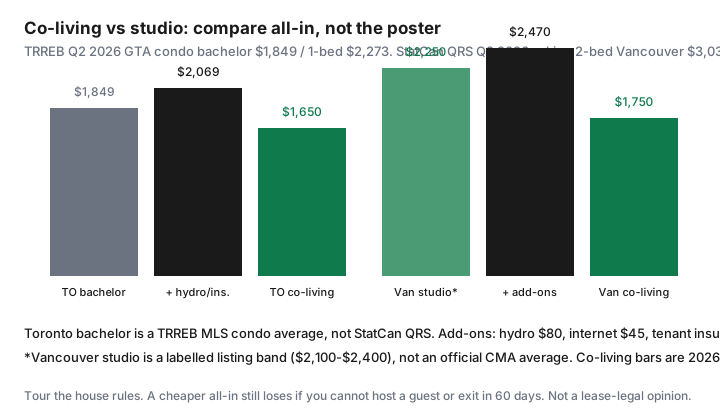
- TRREB Q2 2026 GTA condo bachelor $1,849; labelled studio all-in ≈ $2,069.
- Co-living marketing midpoints: Toronto ≈ $1,650, Vancouver ≈ $1,750 — operator ads, not StatCan.
- Ask about guests, notice, deposits, and whether you are actually a tenant under provincial law.
- A 4–8 month landing pad can be rational. A three-year “temporary” house share rarely is.
What modern co-living leases include
The 2026 product in Toronto and Vancouver is usually a renovated house or mid-rise floor with 6–20 bedrooms, a resident app, and a cleaner on a calendar. Typical inclusions: bed and dresser, shared kitchen inventory, Wi-Fi, heat, and a weekly common-area clean. Typical exclusions: your food, a parking stall, storage for a bike in February, and quiet hours that match a night-shift nurse. Some operators use a standard provincial lease; others use a licence or membership agreement. That distinction is how people lose LTB or RTB remedies they assumed they had. This page will not litigate the form. A clinic will.
Studio all-in costs: rent, utilities, furniture
| Line | Studio (TO) | Co-living (TO midpoint) |
|---|---|---|
| Rent / membership | $1,849 | $1,650 |
| Hydro / heat if extra | $80 | Usually in |
| Internet | $45 | Usually in |
| Tenant insurance | $25 | $25 (still yours) |
| Furniture reserve / 24 months | $70 | $0 if truly furnished |
| Labelled all-in | $2,069 | $1,675 |
A heat-included studio on a hydro-vs-heat worksheet can close most of that gap. A $2,400 “boutique” studio with parking does not. Furniture is not free in co-living either if you still buy a desk and a winter drying rack — just do not finance a sofa you will abandon in month seven. See small-apartment furniture if you take the studio.
Privacy, guests, and commute trade-offs
A closed bedroom is not a studio door. House rules often cap guests at a few nights a month and ban extra occupants. That is a money line if your partner visits from another city or your parents need a sofa after a flight. Commute can cut either way: some houses sit on a subway or SkyTrain; some sit cheap because the bus is 40 minutes. Price the PRESTO, Compass, or Opus product the same week you tour — Transportation is a different hub, but the pass still leaves this budget.
Contract length and exit flexibility
Studios in Ontario and B.C. are usually periodic or fixed-term tenancies with statutory notice. Co-living can be 3-, 6-, or 12-month memberships with a buyout fee. Ask: notice period, whether you can assign the room, what happens if you leave the country, and whether the deposit follows provincial caps (Ontario last-month, B.C. half-month — see first and last). A cheap month-4 exit that costs six weeks’ rent is not flexible.
Who co-living fits (and who it frustrates)
Fits: a newcomer’s first Canadian winter, a contract worker on an 8-month visa, someone who wants furnished and will hunt a longer Kijiji / PadMapper studio with a real application package. Frustrates: couples, people who cook daily, anyone who needs a closed door for client calls at 7 a.m., and households that already know they will stay three years. If the only way the savings rate works is a fourth unofficial mattress, you want roommate math on a lawful two-bed, not a marketing house.
Sample monthly comparisons in Toronto and Vancouver
| City | Studio all-in | Co-living midpoint + insurance | Gap |
|---|---|---|---|
| Toronto | $2,069 | $1,675 | $394 |
| Vancouver | $2,470 | $1,775 | $695 |
Twelve Toronto months of that labelled gap is about $4,700 — real, and not a reason to ignore a guest ban. Vancouver’s larger labelled gap is mostly a more expensive studio band. Confirm both sides the week you sign.
Questions to ask before touring
- Which statute applies, and can I see the blank agreement tonight?
- What is included: heat, hydro, internet, laundry, cleaning, parking?
- Guest nights, overnight partners, and quiet hours — written, not vibes.
- Notice, buyout, and whether the deposit matches provincial rules.
- Who is on the utility accounts if the operator disappears?
- Can I cook at 9 p.m., and how many people share that kitchen?
- Certificate of insurance / tenant-insurance requirement — buy your own contents and liability anyway.
Sources & date stamps
- TRREB Condo Market Report, Q2 2026 — GTA condo bachelor $1,849; one-bedroom $2,273.
- Statistics Canada, Quarterly rent statistics, Q2 2026 (Daily, 9 Sep 2026) — asking 2-bed Toronto $2,650, Vancouver $3,030.
- PadMapper / Kijiji listing culture — how newcomers actually see studio vs room prices (used as process, not as a rent index).
Frequently asked questions
Is Canadian co-living cheaper than a studio?
Sometimes on an all-in basis. TRREB’s Q2 2026 GTA condo bachelor average was $1,849. Add hydro, internet, tenant insurance, and a furniture reserve and a labelled studio sits near $2,069. Co-living operators often market $1,450–$1,850 furnished with utilities. The gap shrinks if the studio is heat-included or the co-living house has guest bans and a 60-day exit fee.
What do modern co-living leases usually include?
A private bedroom (sometimes with a sink), shared kitchen and bathrooms, furniture, Wi-Fi, and a cleaning cadence. Some include laundry and a shuttle of house supplies. Most do not include your groceries, a parking stall, or unlimited guests. Read whether you are a tenant, a licensee, or on a rooming-house style agreement — provincial protections differ.
How do Toronto and Vancouver sample months compare?
Toronto: TRREB bachelor $1,849 vs a labelled $1,650 co-living midpoint. Vancouver: a labelled studio listing band around $2,250 vs $1,750 co-living — StatCan’s official Q2 2026 print for Vancouver is the $3,030 asking two-bedroom, not a studio average. Always replace both sides with this week’s quotes.
Who does co-living frustrate?
Anyone who works odd hours, hosts family, cooks seriously, or needs a 12-month predictable lease. It can fit a newcomer’s first four to eight months while they learn a city and hunt a longer studio with the rental-hunting checklist.
Is this legal advice?
No. Educational cost comparison. Rental platforms and furniture outlets are offer types only. Use LTB, RTB, or TAL resources — or a tenant clinic — for your document.